



Is Balayage Worth It for Fine Hair? Stylist’s Honest Answer
Short Answer: Yes, balayage is worth it for fine hair when it’s done by a colorist who understands how fine strands behave under lightener. Hand-painted highlights, soft placement, and a gentler lift can add the visual depth that makes fine hair look thicker without compromising integrity. The risk isn’t balayage itself — it’s overprocessing. Fine hair has a smaller diameter than medium or coarse hair, which means there’s less cuticle to protect the inner cortex. Aggressive lightening on a small strand causes more proportional damage than the same process on a thick one. Done correctly, balayage on fine hair can be transformative. Done carelessly, it can leave you with straw texture no conditioner will fix.
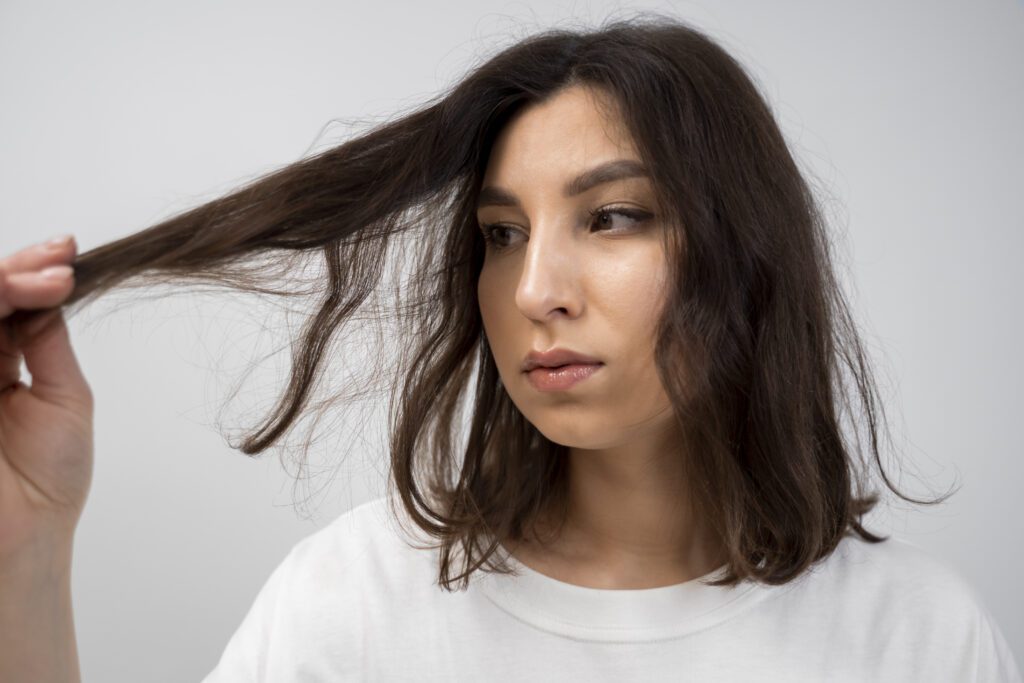
Why Balayage Can Actually Help Fine Hair Look Fuller
Fine hair often reads as flat because there’s not much variation in tone. When every strand reflects light the same way, the eye perceives a single uniform sheet rather than layered, dimensional hair. That’s where balayage earns its reputation.
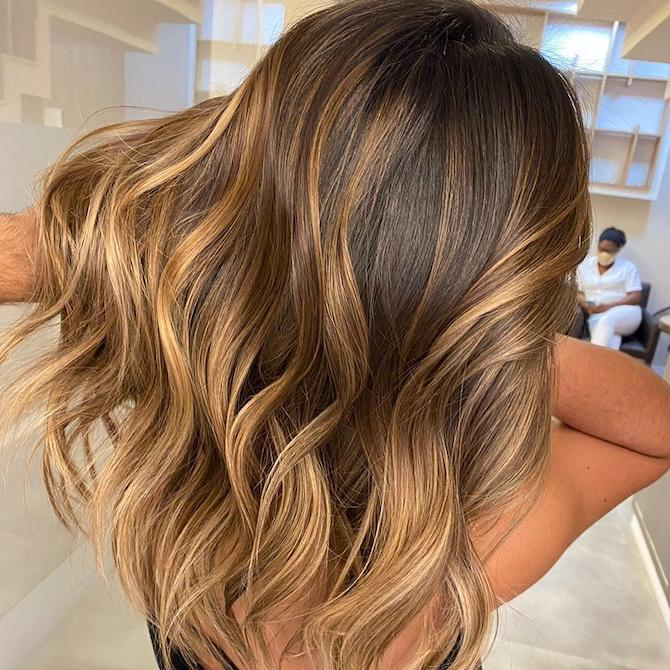
Hand-painted highlights create contrast between lighter and darker pieces. That contrast tricks the eye into seeing texture and movement, which translates to the appearance of more volume. It’s the same visual principle behind contouring in makeup — strategic light and shadow add dimension to a flat surface.
For fine hair specifically, the goals shift slightly compared to thicker hair:
- Softer, more diffused placement so highlights look like sun-kissed pieces rather than stripes
- Strategic face-framing to brighten the eyes and create a focal point
- Lower-contrast tones that blend rather than scream, which keeps fine hair from looking thinner where the highlight bands sit
- Strong base color that anchors the lighter pieces, giving the eye somewhere to land
When all of those elements come together, fine hair reads as fuller, more textured, and more expensive. If you want to dig deeper into the technique itself, our complete guide to balayage walks through how the process actually works.
When Balayage Isn’t the Right Call for Fine Hair
Balayage isn’t universally the best choice. There are a few situations where a different service makes more sense.
If your hair is already damaged. Bleach is bleach, no matter how gentle the application. If your strands are stretching when wet, snapping when you brush, or feeling gummy after washes, you need recovery before you add lift. The American Academy of Dermatology lists chemical lightening as one of the most common ways hair gets damaged, which is why a recovery window matters before adding lift. A bond-building treatment series and a few months of hands-off care will set you up for better long-term results than rushing into color.
If you want a dramatic change in one sitting. Balayage is a gradual, dimensional technique. If you’re going from dark brunette to bright blonde, traditional foiling or a full color correction will get you there faster. Trying to force balayage into doing that job on fine hair almost always leads to overprocessing.
If your goal is full coverage of grays. Balayage blends gray rather than covering it. If you want every strand of gray hidden, a base color or a more traditional highlight pattern is a better fit. We break down the difference in our piece on balayage vs. highlights.
The point isn’t that balayage is bad for these situations — it’s that the right service for your hair depends on your starting point and your goals. A good colorist will tell you when something else is a better fit.
How a Skilled Colorist Protects Fine Hair During Balayage
The difference between balayage that flatters fine hair and balayage that ruins it usually comes down to technique, timing, and product choice. Here’s what an experienced colorist does differently when they see fine hair in the chair.
Lower-volume developer. Fine hair lifts faster than thicker hair because there’s less density to penetrate. Using 20 or 30 volume developer where 10 or 15 would have worked is one of the most common ways fine hair gets damaged in the salon. A skilled colorist matches developer strength to what the hair actually needs, not what’s standard.
Bond-building additives. Products like Olaplex, K18, or similar bond-protectors get mixed directly into the lightener. They help maintain the structural integrity of the hair cuticle during the lift, which means less breakage and a smoother finish afterward.
Strategic placement, not blanket coverage. Painting every section of the head puts unnecessary stress on hair that doesn’t need it. Good balayage on fine hair often uses fewer pieces, placed more thoughtfully, with the goal of creating maximum visual impact with minimum chemical exposure.
Tone, not just lift. Once the lift is done, a glossy toner brings the color into harmony with your base and skin tone. That extra step is what makes balayage look expensive instead of patchy. If you want to understand the finishing layer, our breakdown of gloss vs. glaze vs. toner covers what each one actually does.
Time on the head. Lightener doesn’t need to sit forever to do its job, especially on fine hair. Pulling sections at the right moment — before the hair is overprocessed — is the kind of judgment that comes with years of experience.
Aftercare Is Half the Equation
Even perfect color work won’t hold up if the aftercare is wrong. Fine hair that’s been lightened needs a few specific habits to keep it healthy and the color looking expensive.
- Sulfate-free shampoo to avoid stripping color and stressing the cuticle
- Cool water rinses at the end of every wash to seal the cuticle and add shine
- Weekly deep conditioning with a mask designed for color-treated hair
- Heat protectant before every hot tool — no exceptions
- Limit washes to two or three times a week to preserve the toner and reduce mechanical wear
- A silk or satin pillowcase to cut friction overnight, which fine hair is especially sensitive to
- UV protection in summer or anytime you’re spending real time outside
The first two weeks after a balayage appointment are when the toner is most likely to fade, so this is when aftercare matters most. If you’re new to taking care of color-treated hair, ask your stylist for a recommendation before you leave the salon. The right products for your specific hair will give you weeks more wear out of each appointment.
How Often Should Fine Hair Be Touched Up?
One of the genuine advantages of balayage on fine hair is the relaxed maintenance schedule. Because the color is hand-painted with a soft melt at the root, regrowth doesn’t create a harsh line. Most clients with fine hair can stretch appointments to every twelve to sixteen weeks without the color looking grown out.
Between full appointments, a gloss or toner refresh every six to eight weeks keeps the tone looking fresh and the brassiness at bay. That’s a much lower-touch routine than traditional highlights, which usually need attention every six to eight weeks to avoid an obvious root line.
For fine hair, less frequent lightening sessions are actually a feature, not a bug. The hair has more time to recover between services, which keeps it stronger over the long run.
What to Bring Up at Your Consultation
If you’re considering balayage on fine hair, the consultation is where you set yourself up for a good result. A few things worth raising with your colorist before any product touches your strands.
Your full color history. This includes box dye from years ago, any keratin or smoothing treatments, henna, and previous lightening services. Each of these affects how your hair responds to lightener. A colorist who knows your full history can formulate accurately.
Your styling routine. If you flat-iron daily versus air-drying, that information matters. Heat styling on lightened fine hair compounds wear, and your colorist may suggest aftercare products that account for your habits.
Inspiration photos. Bring two or three images of color you love and one or two of color you don’t. Showing both ends of the spectrum is more useful than only showing your favorites because it helps your colorist understand the range you’re trying to hit.
Your maintenance preferences. Be honest about how often you’re willing to come in. A four-month gap between appointments calls for a different placement strategy than a six-week refresh cycle.
Any concerns about your hair’s health. If you’ve noticed more shedding, breakage at the ends, or general weakness lately, say so. A good colorist will adjust the approach — and may suggest a recovery period before lightening if needed.
Twenty minutes of clear conversation upfront saves hours of correction down the line. If you’re ready to talk through what would suit your hair specifically, our color services at Numi Hair Salon include a consultation built into every balayage appointment.
Ready to try it? Book balayage in Scarsdale and we will customize it for your fine hair.
FAQ
Will balayage damage my fine hair?
Not necessarily — but the risk is real if the work is rushed or done by a colorist who treats fine hair like medium or coarse hair. The damage usually comes from overprocessing: developer that’s too strong, lightener left on too long, or skipping bond-building additives. A skilled colorist who matches the formula to your strand diameter, uses Olaplex or K18 mixed into the lightener, and pulls sections at the right moment can color fine hair without compromising integrity. The question isn’t whether balayage damages fine hair — it’s whether your colorist knows how to protect it.
Does balayage make fine hair look thicker?
Yes, when it’s done right. Fine hair often reads as flat because every strand reflects light the same way. Hand-painted highlights create tonal contrast that tricks the eye into seeing texture, dimension, and movement — which all read visually as more volume. The key is softer, more diffused placement with a strong base color underneath. Stripey or high-contrast balayage can actually emphasize how fine the hair is in the gaps. Softer, blended balayage with strategic face-framing is what creates the fullness illusion.
How often should I touch up balayage on fine hair?
Most fine-haired clients can stretch full balayage appointments to every twelve to sixteen weeks because hand-painted color grows out softly without a harsh root line. In between, a gloss or toner refresh every six to eight weeks keeps the tone fresh and brassiness at bay. That’s a much lower-touch maintenance schedule than traditional foil highlights, which usually need attention every six to eight weeks. For fine hair specifically, the longer gap is a feature — your hair gets more time to recover between lightening sessions.
Is balayage better than highlights for fine hair?
For most fine-hair clients, balayage is the better choice because it requires fewer touch-ups, creates softer dimension, and exposes hair to lightener less often. Traditional foil highlights can work well on fine hair when you want full, even coverage or are trying to lift gray, but the maintenance is more frequent and the harsher contrast can emphasize thinness in the spaces between bands. The decision usually comes down to your goal: dimension and texture (balayage) versus uniform coverage (highlights).
How long does a balayage appointment take for fine hair?
Balayage on fine hair typically takes between two and three hours, which is often shorter than thicker hair because fine strands lift faster. The exact time depends on how much hair you have, how many pieces are being painted, and whether you’re adding a gloss or toner at the end. A first-time appointment may run slightly longer because the colorist needs time for a full consultation, history review, and customized formulation. After the first visit, follow-up appointments often go faster.
Categories
Recent Posts
A blunt cut is hair cut straight across at one [...]
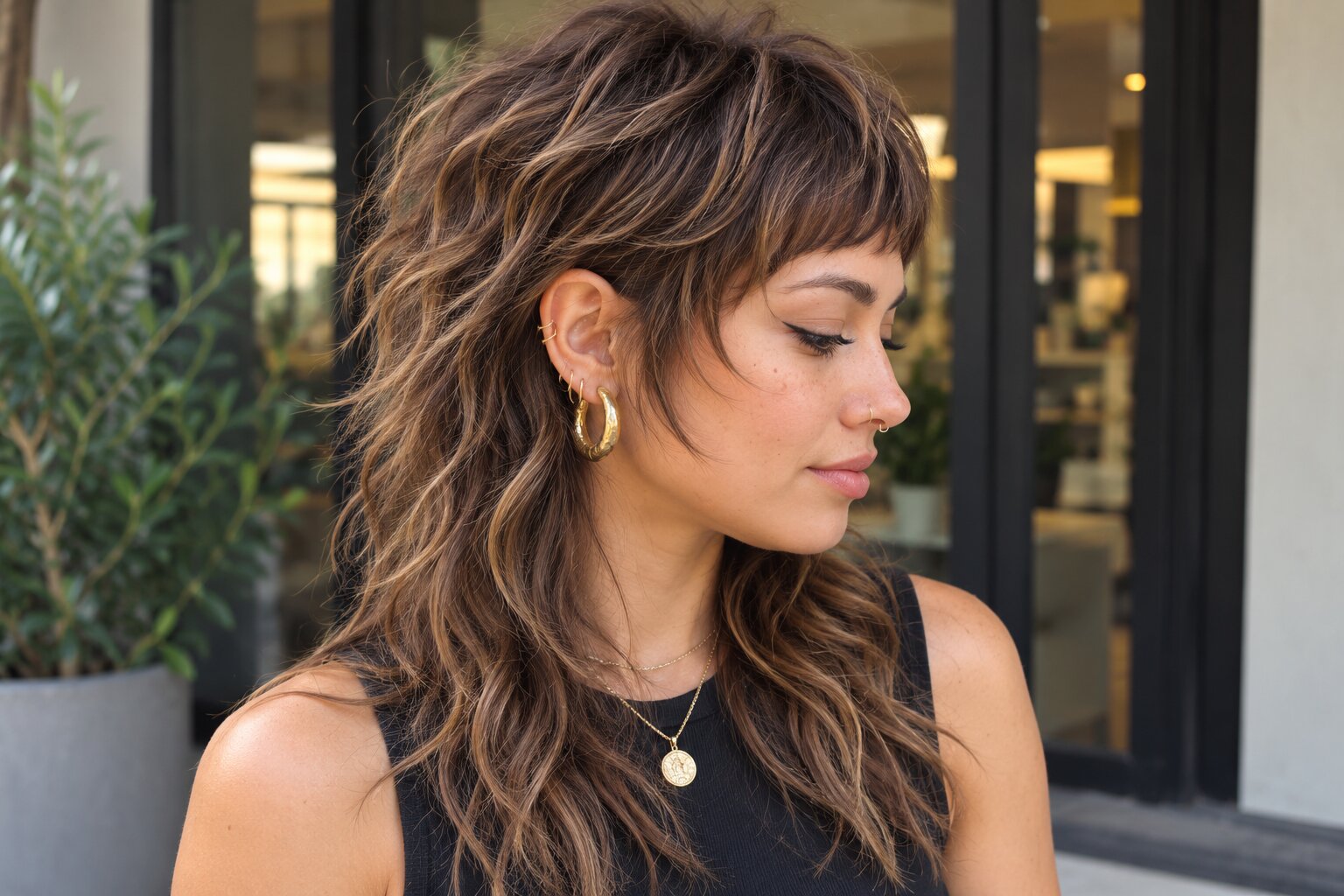
A shullet is a shag and a mullet combined. It [...]
Y2K hairstyles are already back. Claw clips, center parts, face-framing [...]