



Should You Stop Coloring Your Hair When It Goes Gray? How to Decide
Short Answer: There’s no universally correct call here. Plenty of women stop coloring in their 50s and look fantastic. Plenty of others keep coloring through their 70s and look equally fantastic. The decision is yours, and the right time is when you genuinely want to stop — not when someone else tells you it’s time, and not when you’re just tired. That said, here’s the honest stylist take. If you’re asking whether to stop coloring your hair when it goes gray, it’s usually worth asking three more specific questions first: how much gray do I actually have, and where? How often am I really coloring, and what’s it costing me — in time, money, scalp health, hair health? What would my hair look like underneath? You don’t have to commit to fully gray to stop full-coverage coloring. There’s a whole middle category — gray blending, lowlights, glosses — that lets you transition gradually.
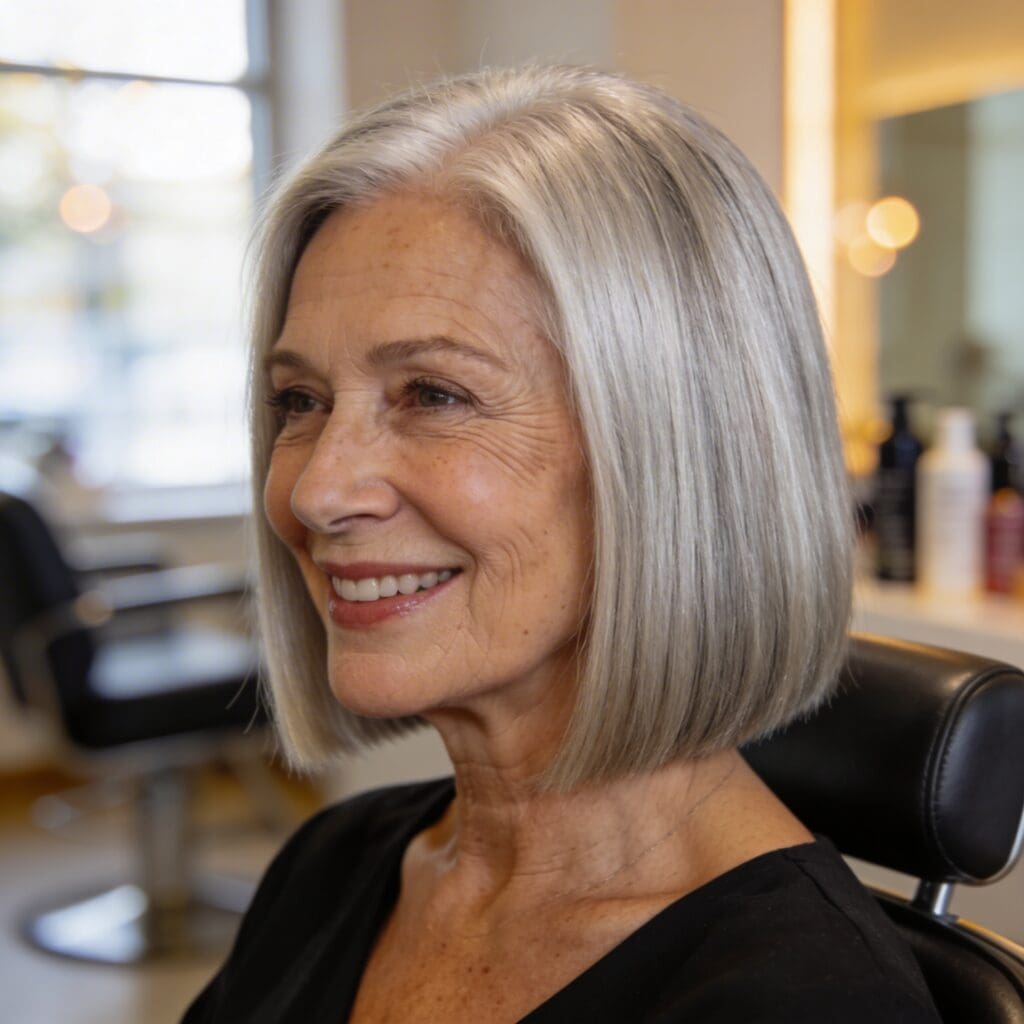
Reasons Women Decide to Stop Coloring Their Gray Hair
Every woman’s reasons are different, but a few come up over and over in the consultation chair. None of them are wrong, and you don’t have to justify yours.
The maintenance has become exhausting. Single-process root color every four to six weeks adds up — in hours sitting in a chair, in money, and in the mental load of always tracking how visible the line of regrowth is. Some women hit a point where the calculation just stops being worth it.
The line of regrowth keeps getting wider. A 70% gray scalp shows a noticeable demarcation within two weeks of color. Many women find themselves coloring more often, not less, and at some point the math stops working.
Their hair has changed and color isn’t doing what it used to. As hair texture shifts with age, color often takes differently — sometimes flatter, sometimes more brassy. Hair that was once gorgeous in a permanent color can start to look heavy or unnatural at 60+.
They’ve seen gray they actually like. Sometimes the trigger is just seeing a woman with a beautiful silver lob and thinking, “Oh — that’s what mine could look like.” That moment of realizing the alternative isn’t what they assumed it was is often what flips the decision.
Scalp or sensitivity reasons. Some clients develop scalp sensitivity over time, particularly to permanent color formulas. Switching to gentler formulas can extend the coloring runway — our guide on which ammonia-free hair color is best gets into this — but for some women, stopping entirely is simply easier.
They just want to. That’s a complete sentence. You don’t owe anyone an explanation.
Reasons to Keep Coloring (and Why That’s Equally Valid)
The cultural conversation has tilted hard toward “going gray is empowering” — and for many women, it is. For many others, coloring their hair is also empowering. Both are choices. Neither is more virtuous.
Common, perfectly valid reasons to keep coloring:
- You like how you look with color and you don’t see a reason to change something that’s working.
- Your career or industry benefits from a particular look. This isn’t capitulation; it’s a strategic choice you’re allowed to make.
- Your gray is patchy or comes in a pattern you don’t love. Some women have gorgeous, even silver. Others have a streak at one temple and nothing on the other side. Color is a legitimate tool to manage that.
- You’re enjoying experimenting with darker, lighter, warmer, or cooler tones than your natural would allow.
- The transition itself feels worse than continuing. Some women decide they’d rather keep coloring than spend 18 months in transition. Also legitimate.
We have clients in their 70s who color, clients in their 50s who don’t, and clients in every decade who are somewhere in the middle. None of them are doing it wrong.
The Middle Path: You Don’t Have to Go All-or-Nothing
This is the part most articles skip, and it’s the part most women actually need. When you’re asking whether to stop coloring your hair when it goes gray, the choice isn’t binary between “permanent root touch-up every four weeks” and “let it grow out cold turkey.” There are several intermediate strategies that let you ease toward your natural color over months or years.
Gray blending. Lowlights and highlights placed strategically through your existing gray pattern to soften the contrast between colored and natural hair. Over a few appointments, your colorist can gradually shift the blend lighter and cooler, mirroring your natural gray more closely each time. By the end, your “transition” is just a haircut. We wrote a whole post on gray coverage vs. gray blending that walks through exactly how this works.
Switching from permanent to demi-permanent. Demi-permanent color fades gradually instead of leaving a hard regrowth line. If you’ve been on permanent single-process for years, switching to demi can soften the visual transition meaningfully.
Cool-toned glosses. Once you stop full-coverage color, a clear or cool-toned gloss every six to eight weeks keeps the gray that’s coming in looking polished — cool, bright, intentional — instead of yellow or dull. Glaze at Numi starts at $75 and takes about 30 minutes — you can see the full menu of Numi’s color services for glaze, gray blending, and balayage pricing in one place.
Cutting it shorter, faster. If your hair is shoulder-length and you want to be fully natural within a year, cutting to a chin-length bob accelerates the timeline dramatically. Cutting to a pixie can complete the transition in a single visit. Not for everyone, but worth considering if you’re committed.
Reverse balayage. A colorist paints darker pieces into mostly-gray hair to add dimension. This works beautifully for women who have more gray than they realized and want some warmth or depth instead of full silver.
The right middle-path strategy depends on how gray you are, how much patience you have for the transition, and what your hair looks like underneath. A consultation with your colorist before you make any decision will save you months of guessing.
What to Expect During the Transition
If you do decide to stop coloring your hair when it goes gray, here’s an honest preview. The biggest mistake we see is women starting the transition and then panicking at month three because they didn’t know what to expect.
Month 1-2: You’ll see a line of demarcation between your colored ends and your natural roots. How visible depends on the contrast — high-contrast (very dark color, mostly silver natural) will show fastest. Most women are fine here.
Month 3-6: The line is now an inch or two long. This is the hardest visual stretch for many women — long enough to be obvious, not yet long enough to look intentional. This is when gray-blending appointments, glosses, or a haircut shorter than your usual really earn their keep.
Month 6-12: Your natural color is now several inches in. Mid-length women often do a more significant cut in this window to remove a chunk of the colored ends and let the natural color become the dominant length.
Month 12-18: Most of your hair is your natural color. A final cut takes the remaining colored ends off. You’re through.
A few honest expectations:
- Your natural gray will likely be drier, coarser, and possibly curlier than the hair you had at 25. Gray hair has a different cuticle structure — the American Academy of Dermatology’s explanation of what causes gray hair covers the underlying biology. You’ll need to update your conditioner, your styling, and possibly your cut to accommodate.
- The first six to eight weeks after the transition completes are often when women decide whether they love it or hate it. Give it that long before judging.
- Yellow and brass are not “your natural gray.” Toned, glossed, healthy gray looks completely different from untreated gray. Don’t judge the final result until you’ve seen it with a gloss.
- A great cut matters more than ever. We cover modern cut shapes in our piece on hairstyles for women over 50 — gray hair almost always looks better with a current, well-cut shape.
Questions Worth Asking Before You Decide
A short list to think through, or to bring to a consultation. There are no right answers — only your answers.
- How often am I coloring right now, and is that sustainable for the next 10 years?
- What does my hair look like at the roots right now? Have I seen enough to know what I’d be working with?
- Am I considering this because I want to, or because someone (a partner, a friend, an internet article) suggested I should?
- If I tried a middle-path approach for six months, would that tell me what I need to know?
- What’s my actual budget for this — both for ongoing color and for the transition if I stop?
- Do I have a stylist I trust to be honest with me about how the transition is going? (If not, that’s the first thing to fix.)
FAQ
Should I stop coloring my hair when it goes gray?
There’s no universally correct answer. The right time is when you genuinely want to stop — not when someone else tells you it’s time, and not when you’re just tired of the maintenance. Before deciding, three questions matter: how much gray do you actually have and where, how often are you really coloring (and what’s that costing in time and money), and what does your hair look like underneath the color. You also don’t have to choose between full coverage and going natural — gray blending, lowlights, and glosses let you transition gradually over a year or two without a hard regrowth line.
How long does the gray transition take?
Most full transitions run 12 to 18 months from the last full-coverage color to fully natural hair, assuming average growth of about half an inch per month and average shoulder-length starting hair. You can shorten it significantly with a cut — going to a chin-length bob can compress the timeline by months, and a pixie can complete it in a single visit. The actual hard stretch (when the line of demarcation is most obvious) is usually months 3 through 6.
What is gray blending, and how is it different from full coverage?
Gray blending uses strategically placed highlights and lowlights to soften the contrast between your existing gray and your colored hair, rather than covering every gray strand. Over a few appointments, your colorist can shift the blend lighter and cooler so it mirrors your natural gray more closely each time. By the time you’re fully transitioned, there’s no harsh line — just a haircut that takes off the last of the colored ends. It’s the most popular middle-path option for women who want to stop full coverage without committing to a cold-turkey grow-out.
Will my gray hair look yellow or brassy?
Untreated gray can develop yellow or brass tones, especially on hair that’s exposed to sun, heat styling, or mineral-heavy water. Toned, glossed, healthy gray looks completely different — cool, bright, intentional. A cool-toned gloss every six to eight weeks keeps the color polished. A purple shampoo used once or twice a week between glosses neutralizes residual brass. Don’t judge what your gray will look like until you’ve seen it properly toned, conditioned, and cut.
Can I go back to coloring if I don’t like being gray?
Yes — completely. Nothing about going gray is irreversible. If you transition fully, live with it for a few months, and decide you preferred color, your colorist can put you back on a coloring schedule. Some women do exactly this: try natural for a year, decide it isn’t for them, and return to color with more clarity about why they’re choosing it. The decision is yours, and you can change it.
Categories
Recent Posts

Micro bangs are a very short fringe cut well above [...]
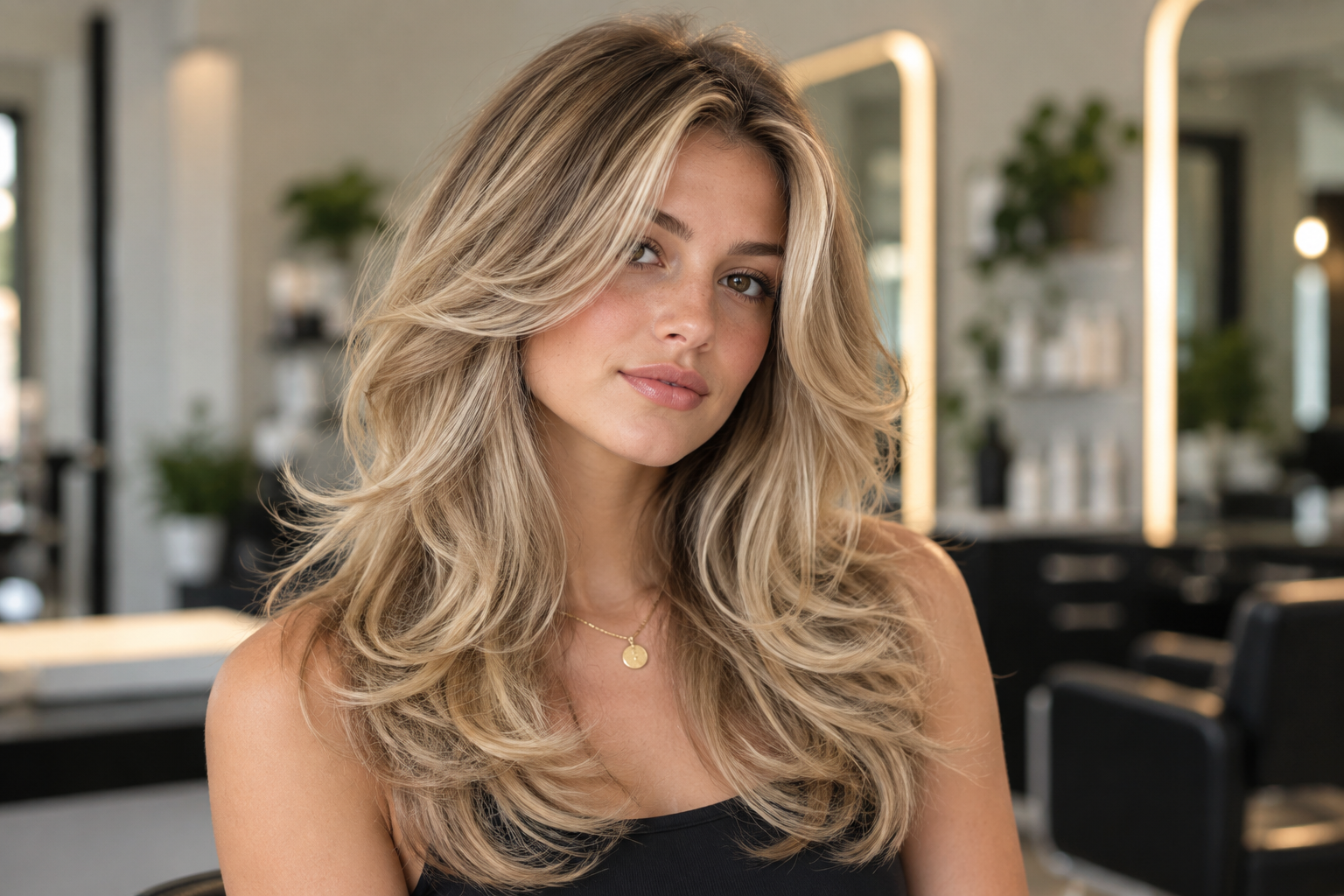
A 90s blowout is a blow dry style with big, [...]
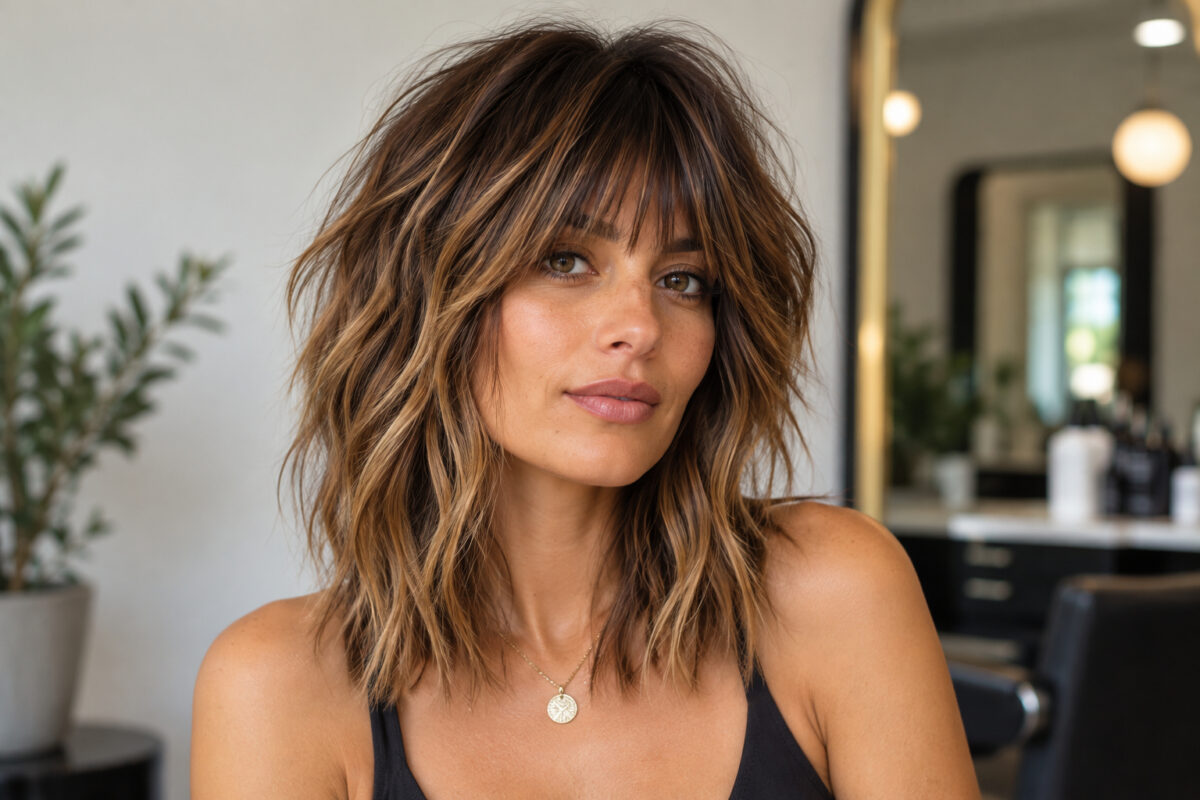
A modern shag haircut is a layered cut with soft, [...]