



Can Balayage Cover Gray Hair? What Actually Works in 2026
Short Answer: Balayage doesn’t cover gray hair the way a base color does, but it can blend and disguise grays beautifully when the percentage is low to moderate. If your gray coverage is under about 30 percent and the grays are scattered rather than concentrated, balayage alone can soften them into the rest of your color so they read as natural highlights. Once gray coverage climbs past roughly 40 to 50 percent, balayage on its own usually isn’t enough. The grays start to dominate, and hand-painted highlights end up emphasizing them rather than camouflaging them. In those cases, the best results come from pairing balayage with a root tint or all-over base color — sometimes called a “color melt” or “balayage with a root smudge.” Balayage is a blending tool, not a covering tool. Knowing the difference is the key to whether the service works for you.
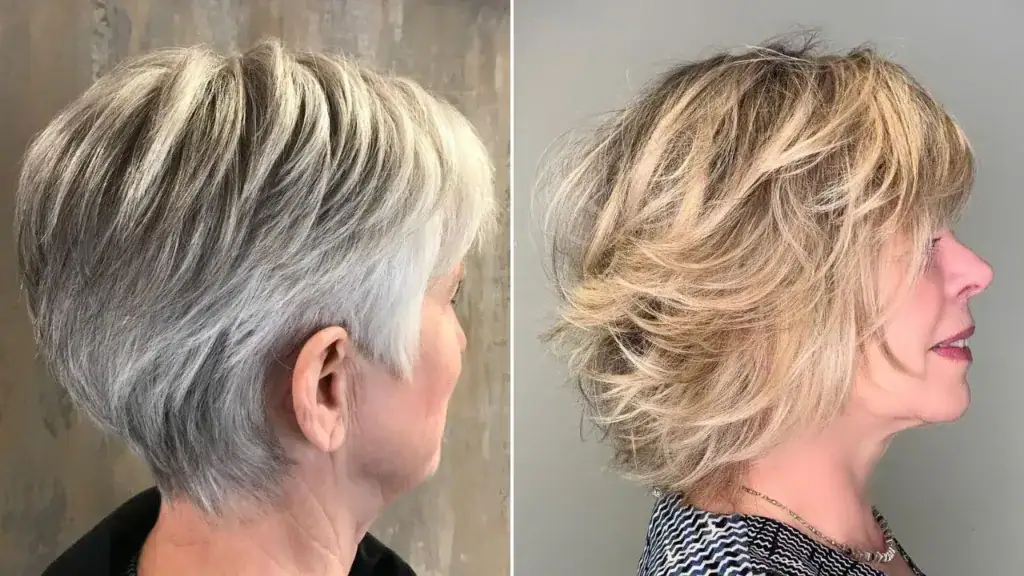
Why Balayage Doesn’t Truly Cover Gray
Traditional permanent color contains a higher pigment load and is designed to deposit color directly into the hair shaft, replacing what’s there. Gray hair, which has lost its melanin (the pigment that gives hair color, per the American Academy of Dermatology), accepts that pigment and ends up matching the surrounding hair.
Balayage works differently. Lightener removes pigment from sections of hair to create a sun-kissed effect. Then a gloss or toner is applied to bring everything into harmony. Neither of those steps is built to deposit dense pigment into gray strands — they’re built to lighten and tone. The result is that grays in a balayage service often:
- Lift along with the surrounding hair, sometimes ending up brighter than intended
- Resist toner more than pigmented hair does
- Show up as bright, almost white pieces if the placement happens to land on them
- Reappear at the root within weeks because nothing has been done to color them at the base
That doesn’t make balayage a bad choice for someone with gray hair. It just means the strategy has to account for what balayage actually does — and doesn’t do.
When Balayage Can Cover Gray Hair on Its Own
If your grays are scattered, sparse, or concentrated in a way that’s easy to camouflage, balayage alone can work beautifully. A few situations where a stand-alone balayage tends to deliver good results when the question is whether balayage can cover gray hair:
- Salt-and-pepper hair you want to embrace. Soft, dimensional lightening can lean into the silver and create a sophisticated, intentional look rather than fighting the grays.
- A few stray grays at the temples or part. Strategic face-framing pieces can pull the eye toward the dimension instead of the gray.
- Naturally light hair with low gray percentage. When your base is already light, the contrast between hair and gray is smaller to begin with, and balayage closes the gap quickly.
- A goal of looking lighter and more lived-in. Some clients want their grays to read as highlights, and balayage can absolutely deliver that.
For the right starting point, balayage gives you a low-maintenance option without committing to monthly root touch-ups. Our complete balayage guide walks through the basics of how the technique works if you want a deeper background.
When You Need More Than Balayage to Cover Gray Hair
If your gray coverage is heavier, balayage by itself rarely gets the job done. Here’s how to tell when you need to combine it with another service.
You can see the gray from across the room. When grays are visible at a glance — especially in photos or under bright light — that’s usually a sign coverage is north of 30 percent. At that point, blending starts to fall short.
You have a stripe of gray at the part or temples. Concentrated bands of gray are harder to disguise with hand-painted highlights because the lightener can’t reach densely enough to cover. A root tint will do that job in twenty minutes.
You’re seeing roots within two weeks. If new growth is showing up fast and the gray feels like a moving target, it’s a sign that base color is going to give you longer wear than balayage alone.
You want full coverage. This is the simplest test. If your goal is no visible gray at all, balayage isn’t the right tool. A traditional base color, possibly paired with highlights for dimension, is the right approach.
We dig further into when to choose between techniques in our piece on balayage vs. highlights.
The Best of Both: Balayage Plus a Root Tint
For clients with moderate to heavy gray who still want the soft, lived-in feel of balayage, the most flattering option is usually a combination service. It goes by different names depending on the salon — “balayage with a root smudge,” “shadow root balayage,” or simply “balayage plus tint” — but the strategy is the same.
The colorist applies a permanent or demi-permanent color at the root to handle the gray coverage. Then balayage is hand-painted through the mid-lengths and ends to add brightness and dimension. A final gloss melts the whole thing together so there’s no harsh demarcation line. The result is hair that looks both deeply dimensional and meticulously covered. Maintenance is still easier than traditional highlights because the balayage portion grows out softly, even though the root color will need refreshing every four to six weeks.
A few advantages of this combined approach:
- Full gray coverage without losing dimension
- Roots that grow out without an obvious line
- Less overall lightener on the hair than a full highlight
- A finished color that reads expensive rather than monochromatic
This is a service worth booking a consultation for. Color goals, gray pattern, and hair history all influence how the formula and placement should be customized.
When you are ready, you can book balayage at Numi and we will tailor the approach to your gray.
Maintenance and Aftercare for Gray-Blending Balayage
Once your color is where you want it, holding onto it takes a little intention. Gray hair has a different texture than pigmented hair — it tends to be coarser, more porous, and more resistant to toner — which means a few specific aftercare habits make a noticeable difference.
- Purple shampoo once a week to neutralize any warm tones that creep in as toner fades
- Color-safe, sulfate-free wash routine to extend tone and prevent stripping
- Weekly deep conditioning treatment because gray hair often runs drier
- A gloss refresh every six to eight weeks to keep the tone soft and dimensional
- Heat protection on every styling session — gray hair can show damage faster
- UV protection when you’re outdoors, especially in summer
If a brassy or yellow cast develops between salon visits, that’s normal and easy to fix. A toning gloss in-salon takes about thirty minutes and resets the color. Our breakdown of gloss, glaze, and toner explains how each of these refresh services works.
How Long Does the Appointment Take?
For balayage alone, expect two to three hours in the chair. When the service is combined with a root tint, the appointment usually runs three to four hours. The exact time depends on hair length, density, and how much placement is needed. We break down the full timing in our piece on how long balayage takes.
It’s worth booking a consultation before your first appointment, especially if you’re managing a meaningful amount of gray. Twenty minutes with a colorist can clarify whether balayage, balayage plus root, or a different service entirely is the right call for where your hair is right now and where you want it to go. Our color services at Numi Hair Salon include balayage, root smudge combinations, and gloss refreshes for clients managing gray.
FAQ
Can balayage cover 100% gray hair?
No — balayage by itself can’t deliver full coverage on hair that’s mostly or entirely gray. Balayage is a lightening and blending technique, not a pigment-depositing one, so it doesn’t replace the melanin that gray hair has lost. For 100% gray coverage, you need a permanent or demi-permanent base color. The dimensional alternative is a combination service: a root tint to cover the gray, plus balayage through the mid-lengths and ends for brightness and movement. That combination gives full coverage with the soft grow-out that makes balayage popular in the first place.
What percentage of gray can balayage hide?
Stand-alone balayage works well up to roughly 30 percent gray when the grays are scattered rather than concentrated. In that range, hand-painted highlights blend with the existing grays and read as natural dimension. Between 30 and 50 percent, results get inconsistent — balayage might still work depending on placement and gray pattern, but a root smudge often improves the finish. Above 50 percent, balayage on its own usually isn’t enough, and a combination service with a root tint is the better path.
How long does balayage on gray hair last?
The lightener portion of balayage is permanent and grows out softly without a harsh line, so most clients can stretch full appointments to 12 to 16 weeks. The toner or gloss that finishes the service fades within 6 to 8 weeks, which is when most clients book a refresh. If your service includes a root tint to cover heavier gray, the root color needs touching up every 4 to 6 weeks because gray regrowth shows faster than lifted regrowth.
Is balayage or highlights better for gray hair?
For low to moderate gray (under about 30 percent), balayage is usually better because it grows out softer and requires fewer touch-ups. For heavier gray that needs more uniform coverage, traditional foil highlights can do a better job of fully camouflaging concentrated gray bands. The decision often comes down to your gray pattern (scattered vs. concentrated) and how often you’re willing to come in. A consultation is the fastest way to figure out which technique fits your specific hair.
Will balayage make my gray hair look brassy?
Not if it’s done well and you maintain the toner at home. Gray hair is more prone to grabbing warmth from minerals, sun, and product buildup, but a good colorist accounts for that with a cooler toner and a balanced placement. To keep brassiness at bay between appointments, use a purple or blue shampoo once a week, a sulfate-free wash routine, and book a gloss refresh every six to eight weeks. If your hair is going brassy fast, the cause is usually hard water or daily product habits — not the balayage itself.
Categories
Recent Posts
Micro bangs are a very short fringe cut well above [...]
A 90s blowout is a blow dry style with big, [...]
A modern shag haircut is a layered cut with soft, [...]