



Do Bangs Actually Make Older Women Look Younger? Honest Stylist Take
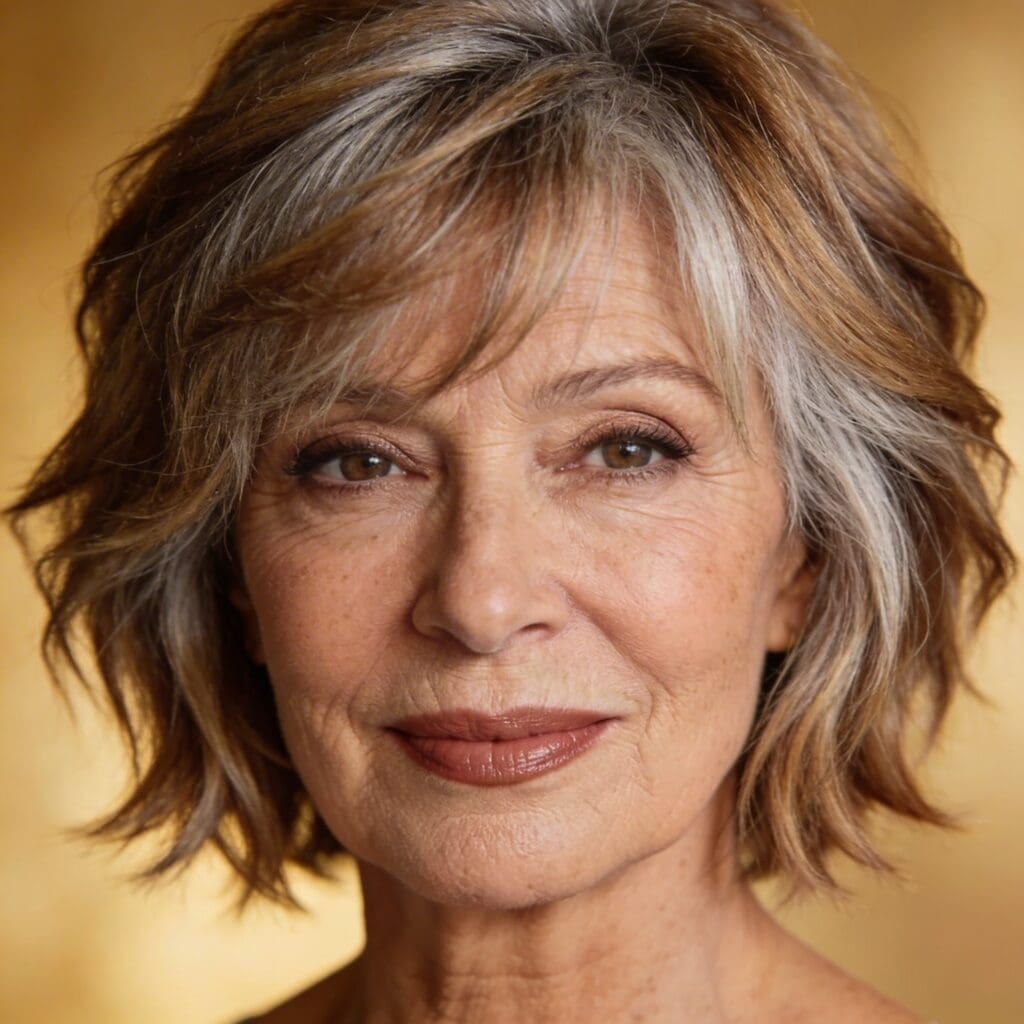
Why Bangs Can Make Older Women Look Younger
The “younger” effect from bangs isn’t magic — it’s specific and explainable. A few things happen when you add a well-cut fringe to a face that’s been bare for years: They soften the hairline. As we age, the hairline at the temples often recedes slightly, and the forehead becomes a larger visual feature of the face. Bangs reframe the face higher, restoring proportion and giving the eyes a softer landing. They draw the eye to your eyes. A fringe creates a horizontal line that the viewer’s gaze follows directly down to your eye area — historically one of the most expressive, youthful-coded parts of the face. Bangs essentially put a spotlight on your eyes instead of on the forehead. They camouflage forehead lines. Not a small thing. Without makeup or filler, forehead lines are often what reads as “older” before anything else does. A soft fringe doesn’t hide them like a wall — it just gives the eye somewhere else to land first. They add youthful texture. A fringe with movement adds softness and shape that a one-length cut alone can’t. Movement reads as youth on any age, on any face. They pair naturally with dimensional color. A face-framing balayage in Westchester placed around the temples and cheekbones compounds the softening effect of a new fringe. The bang draws the eye up to the eyes; the color adds warmth around the jawline where skin naturally loses tone with age. Bang alone: good. Bang plus strategic color: dramatic. This is why our post on haircut for older women with thin hair consistently emphasizes face-framing pieces and fringe — the technique works because of how the eye reads the finished shape, not just because bangs are trendy.
When Bangs Actually Backfire
This is the part nobody talks about, and the part you’ll hear plainly from any honest stylist. There are real situations where bangs do not flatter, and adding them can actively age a woman five years instead of removing five. Heavy, blunt bangs on fine or thinning hair. A thick, dense bang requires hair density to support it. On finer hair, blunt bangs can look sparse, expose more scalp, and create a stark line that draws attention to thinning at the front. Fine hair is much better served by a soft, layered, wispy fringe — or no fringe at all and face-framing pieces instead. Our piece on the best haircuts for fine hair goes deeper on this. Short brow-skimming bangs on a long or oval face. Brow-grazing or shorter bangs on an already-elongated face can make the face look longer, not shorter, and emphasize narrow features. Side-swept or curtain bangs work much better here. Any bang on hair that’s actively thinning at the part or hairline. If you’re already noticing diffuse thinning at the front of the scalp, pulling extra hair forward into a fringe can leave the rest of the parting looking sparser. We’d recommend reading our guide on how to cover thinning hair before committing. Tight, set bangs that don’t move. A bang lacquered into a single piece looks dated almost immediately, regardless of age. The whole reason a fringe flatters is that it has softness and motion — kill that and you lose the effect entirely. Fringes without frizz control on humid days. Bangs sit against your forehead — the first place frizz shows, and the first to fall out of shape in humidity or sweat. If frizz is a chronic issue with your hair, a professional keratin treatment keeps bangs smooth against the forehead through weather changes and workouts. The difference between an intentional fringe and constant midday readjustment. Bangs that won’t fit a low-maintenance lifestyle. Real talk: full, blunt bangs need trims every three to four weeks. If you’re not going to come in that often, they’ll grow into your eyes within five weeks and you’ll spend two months pinning them back, frustrated. Curtain bangs and longer, soft fringes are far more forgiving on the trim schedule. The most common backfire we see is when a client asks for short, thick, blunt bangs because she saw them on a 30-year-old with a totally different hair texture and face shape. The cut itself isn’t bad — it’s just wrong for the canvas.
Which Bangs Flatter Which Face Shape
Quick guide, with the caveat that these are starting points, not rules. Every face is different and a good consultation will adjust for the things a face-shape framework can’t see. Round face: Side-swept bangs or long curtain bangs that part off-center. These add vertical movement and don’t widen the face. Avoid full, blunt, straight-across bangs that emphasize roundness. Oval face: The most flexible canvas — most bang styles will work. Curtain bangs, soft blunt bangs hitting just above the brow, or wispy fringe all flatter. Lean into whichever texture matches your hair. Long or rectangular face: Curtain bangs, side-swept bangs, or longer, softer fringes that add width across the forehead. Short blunt bangs can shorten the face visually — sometimes desirable, often not. Discuss with your stylist. Square face: Soft, side-swept, or curtain bangs that break up the strong angles at the brow and jaw. Avoid heavy, geometric bangs that emphasize the square. Heart-shaped face: Curtain bangs that taper longer at the cheekbones balance a wider forehead and narrower chin. Wispy fringe also works well. Diamond face: Side-swept bangs or curtain bangs that soften the forehead. Avoid bangs that are too short or too straight. If you have glasses, the bang has to interact with the frame. Generally, the bang should sit just above the top of the frame, not inside the lens line. Bring your glasses to your appointment — we’d rather see the full picture than guess.
The Curtain Bang: Why It’s Our Default Recommendation for Older Women
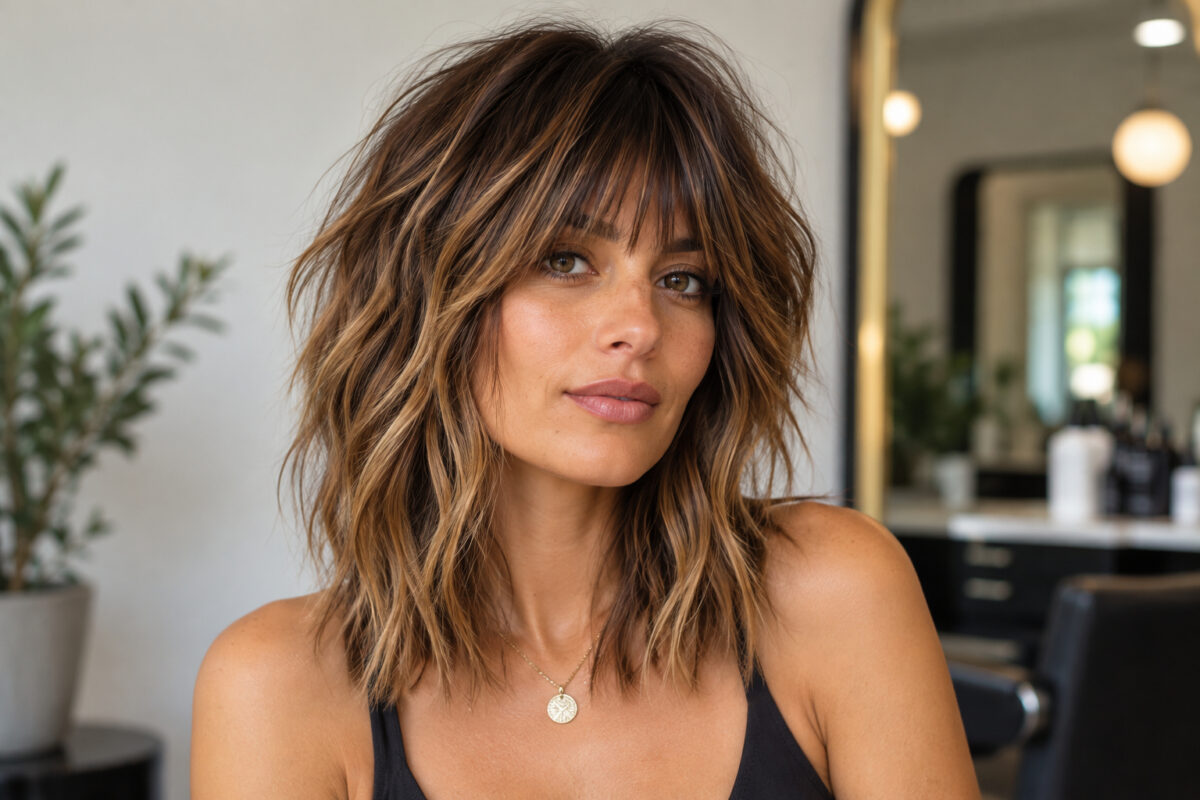
If you read this whole post and skip everything else, here’s the takeaway: the curtain bang is the most universally flattering bang for women over 50, and it’s the one we recommend most often when clients ask whether bangs make older women look younger. Why it wins:
- Length is forgiving. Curtain bangs typically hit somewhere between the cheekbone and the jaw, parted in the middle or slightly off-center. They’re not so short that they require constant trims, and not so long that they disappear into your length.
- Grow-out is graceful. Most bangs go through an awkward in-between phase. Curtain bangs essentially don’t — they grow into longer face-framing pieces that still flatter on their own.
- They work on most hair textures. Fine, medium, or thick — curtain bangs adjust easily. On finer hair, they’re cut with softer, more wispy ends. On thicker hair, they’re internally graduated to remove weight.
- Styling is fast. A round brush blowout for three minutes — sometimes just a quick lift with a hairdryer and your fingers — and they fall into shape. No daily flat-iron required.
- They draw attention up. Same flattering eye-frame effect as heavier bangs, with none of the maintenance penalty.
We wrote a deeper piece on curtain bangs — who they suit, how to style them, and how to maintain them between cuts. Curtain bangs at Numi are included in a standard women’s cut, which starts at $75. If you’re already a regular client, we can often add curtain bangs at your next appointment without restructuring the whole cut. You can see the full range of haircut services at Numi if you’d like to compare stylist options and pricing before you book.
How to Decide If Bangs Are Right for You
A simple decision framework when you’re sitting in the chair, or before you book: Try it without scissors first. Take a section of hair from the back of your crown, pull it forward, and pin it across your forehead in a bang-like shape. Live with it for an hour. Doesn’t tell you everything, but it tells you something. Be honest about maintenance. How often are you realistically willing to come in for a bang trim? If the answer is “every three to four weeks,” any bang will work. If the answer is “every eight weeks,” you need a curtain bang or no bang. Think about your daily styling time. If you have a tool-free routine, a heavy blunt bang is not for you. A wispy or curtain bang is. Look at the photos honestly. Pull up reference photos and look at the woman’s face shape, hair texture, and age — not just the bang. A bang on a 35-year-old with thick hair will not translate to a 65-year-old with fine hair, no matter how cute it looks. Ask your stylist what they’d suggest before you ask for a specific bang. We see your hair texture, your hairline, your face in motion. We can often recommend a bang style you hadn’t considered that suits you better than the one you came in with.
Ready to Try Bangs at Numi?
The right bangs come down as much to the stylist reading your face as to the cut itself. Our team at Numi Hair Salon has cut bangs on women in their 20s through 70s — and because we’re a family salon, grandmothers, mothers, and daughters often book together. Kids’ cuts (including first-fringe trims) are handled by the same stylists at our kids haircut service, so a multi-generational visit is easy to schedule.
Book online or call 914-574-6402. Numi Hair Salon · 69 Harney Road, Scarsdale, NY 10583.
FAQ
Do bangs make older women look younger?
Yes — the right bangs can. The effect works by softening the hairline, drawing the viewer’s eye to the eyes (one of the most expressive parts of the face), and gently breaking up forehead lines so they’re no longer the focal point. Curtain bangs, soft side-swept bangs, and wispy fringes tend to produce the strongest “younger” effect. The wrong bangs — heavy blunt fringes on fine hair, short brow-skimmers on a long face, or any bang that doesn’t move — can do the opposite. The question is which bang, on which face, with which texture and lifestyle.
What is the most flattering bang for women over 50?
The curtain bang is our most-recommended fringe for women over 50. It’s forgiving on length, grows out gracefully without an awkward phase, works on most hair textures (fine, medium, thick), and styles in three minutes with a round brush. It draws the eye up to the face the way heavier bangs do, but without the four-week trim cadence. If you’ve never had bangs as an adult, curtain bangs are the gentlest entry point.
Will bangs make me look older if my hair is thinning?
Heavy or blunt bangs can — they require density to look intentional, and on thinning hair they can expose more scalp at the front and create a sparse line. Soft, wispy, layered fringes or curtain bangs work better. If your thinning is significant, face-framing pieces (longer, around the cheekbones) without a true fringe is often the more flattering call. The right answer depends on your specific thinning pattern, so a consultation matters more than a general rule.
How often do bangs need to be trimmed?
Full, blunt bangs need a trim every three to four weeks to maintain the shape and stay out of the eyes. Curtain bangs and longer wispy fringes are more flexible — every six to eight weeks usually works, and they look intentional even between trims. If your schedule or budget can’t support a frequent trim cadence, choose a curtain bang over a blunt one. It’s not a compromise; it’s the better cut for that lifestyle.
Will bangs work with my glasses?
Yes, with one rule: the bang should sit just above the top of the frame, not inside the lens line. Bangs that disappear into glasses look messy and obscure the eye area, which defeats the whole purpose of a fringe. Bring your glasses to your appointment so your stylist can cut the length to work with the specific frame. Curtain bangs and side-swept bangs usually integrate the most easily with eyewear.
Categories
Recent Posts
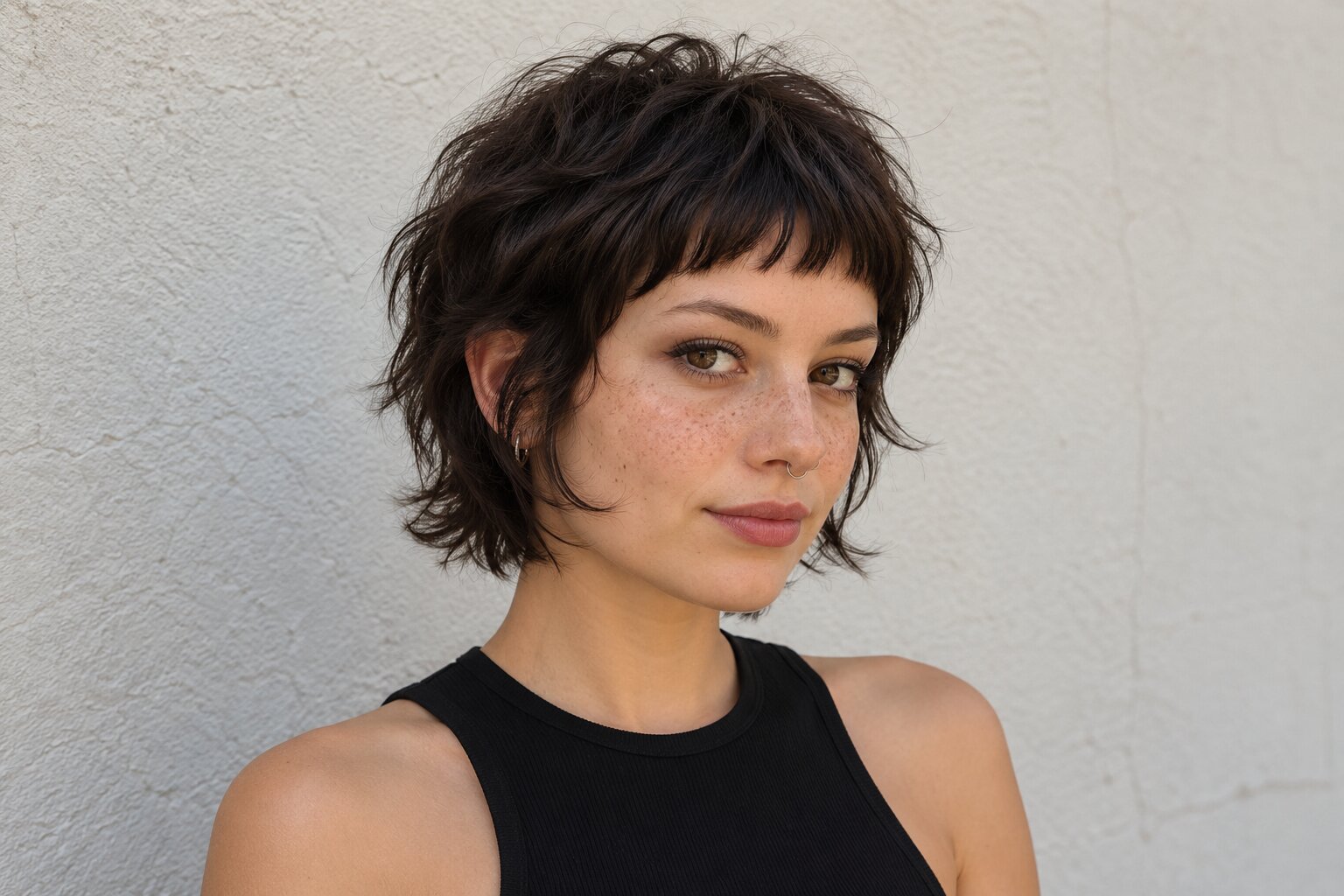
Micro bangs are a very short fringe cut well above [...]
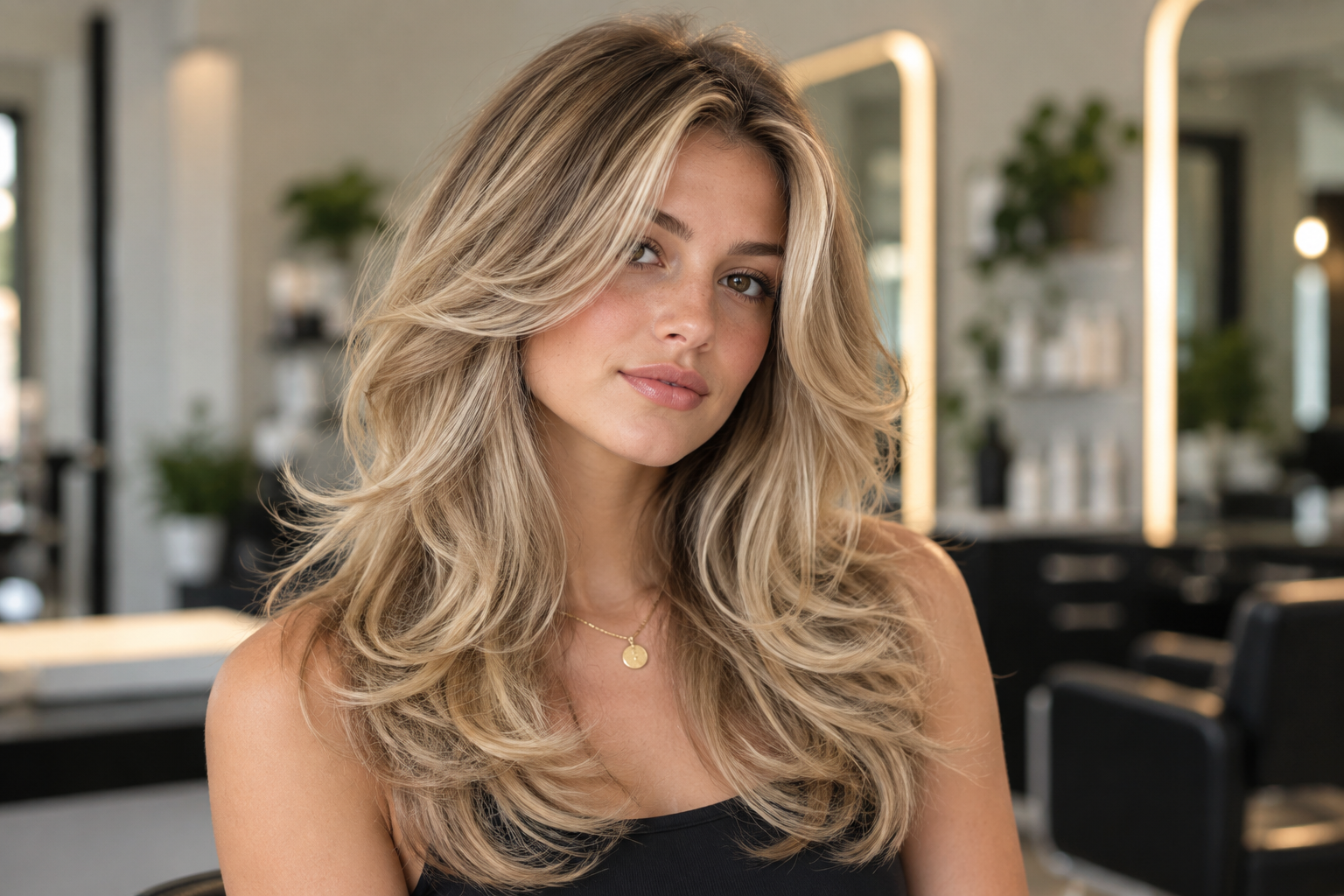
A 90s blowout is a blow dry style with big, [...]
A modern shag haircut is a layered cut with soft, [...]