



Why You Should Get a Shag Haircut for Fine Hair
Short Answer: A shag haircut works on fine hair when the layers are concentrated at the crown for lift and kept long through the ends to preserve density. The cut creates volume and movement that flat, one-length fine hair cannot. The mistake to avoid is over-layering the ends, which is what makes fine hair look thinner. Ask for a soft or modern shag with face framing and a fuller perimeter.
Why Does a Shag Make Fine Hair Look Fuller?
A shag makes fine hair look fuller because short layers at the crown physically lift the hair away from the head. Fine hair lies flat under its own weight. When a stylist cuts shorter layers on top, those pieces stand up and away from the scalp, creating volume that no product can fake.
The second reason is movement. One-length fine hair hangs in a sheet, and a sheet shows every bit of thinness. A shag breaks that sheet into pieces that shift and overlap, so the eye reads texture instead of scarcity.
The key is where the layers go. Volume comes from the top of the cut. Density lives at the bottom. A well-cut shag for fine hair puts heavy layering at the crown and barely touches the perimeter.
We Hear This Worry Every Week
Almost every fine-haired client asks the same thing before a shag: “Won’t layers make it look even thinner?” It is a fair worry, because bad layering absolutely does that. If a stylist runs short layers all the way through the ends, the perimeter goes wispy and see-through, and the whole cut reads thin.
That is a technique failure, not a shag failure. The modern shag holds weight in the last inch or two of the ends on purpose. You get lift at the top and a full-looking hemline at the bottom. If your last layered cut left your ends stringy, the layers were in the wrong place.
What Is the Difference Between a Shag and Regular Layers?
A shag uses shorter, choppier, more aggressive layering than a standard layered cut, especially around the crown and face. Regular layers blend seamlessly into each other. Shag layers are meant to be seen. They create visible separation and that cool, undone rock-and-roll texture the cut is famous for.
The modern shag family also includes some cuts you have probably seen trending. The butterfly cut is essentially a long, softer shag with dramatic face framing. Curtain bangs, wolf cuts, and mixies all borrow from the same layering playbook. The shag is the parent of all of them.
Who Should Get a Shag (and Who Should Not)?
The shag is a strong match for:
- Fine, straight hair that falls flat. The crown layers create lift you cannot get any other way.
- Fine wavy hair. This is the jackpot combination. The layers activate the wave, and the wave fills out the layers.
- Clients who want volume without daily styling. The shape does the work, not the blow dryer.
- Anyone growing out a shorter cut. A shag turns the awkward stage into an intentional style.
Think twice if your hair is extremely fine and also sparse at the crown. Very short layers over visible scalp can highlight thinning instead of hiding it. In that case a fuller, blunter shape usually works better; our guide to the best haircuts for fine hair walks through those options, and for thinning specifically, our post on haircuts for older women with thin hair covers the most flattering shapes we cut every week.
How Do You Ask for a Shag on Fine Hair?
Say this at your consultation: “I want a modern shag with the layers concentrated at the crown, soft face framing, and weight left in the ends.” Those three details protect you from the over-layered version.
Then work through these choices with your stylist:
- Length. Collarbone to shoulder length is the sweet spot for fine hair. Enough length for movement, not so much that weight drags the volume down.
- Bangs. Curtain bangs are the classic shag pairing and they soften the whole look. Skip them if you want the lowest-maintenance version.
- How choppy. A “soft shag” blends the layers for an everyday look. A true shag shows more separation and edge. Both work on fine hair; it is a style call.
This conversation is the most important five minutes of the appointment. Every women’s haircut at Numi starts with it, because the difference between a great shag and a thin-looking one is entirely in the plan.
How Do You Style a Shag with Fine Hair?
Less than you think. The cut carries the shape. Most fine-haired clients need only this:
- Volumizing mousse at the roots on damp hair. A golf-ball amount, roots only. Product through the lengths weighs fine hair down.
- Rough dry upside down or with fingers. Flipping your head while drying sets the crown layers upward.
- Texturizing spray to finish. A light mist through the mid-lengths brings out the piece-y separation.
On wavy hair, you can skip the dryer entirely: scrunch in a light mousse and air dry. Total time, about three minutes.
How Often Does a Shag Need a Trim?
Every 8 to 10 weeks. The shag is forgiving as it grows because the layers are meant to look lived-in, so it holds its shape longer than blunt cuts. When the crown layers grow past the point of lifting, that is your signal to rebook. That forgiving grow-out is what puts the shag on most lists of low-maintenance hairstyles for fine hair over 60, alongside the crop and the chin-length bob.
Book Your Shag Consultation at Numi Hair
Cutting a shag on fine hair takes judgment about exactly where the volume should live on your head, and that judgment comes from repetition. Many fine-hair clients pair the cut with face-frame highlights to accentuate the layered fringe and a K18 bond-repair treatment to strengthen the newly layered ends, and clients working directly with Gabriel book a women’s haircut with Gabriel for the master-level version of the shag consultation. Our stylists average 10+ years of experience, and Numi has been voted Best Hair Salon in Westchester with 2,365+ Google reviews at a 4.9 average rating.
Book your appointment online or call us at 914-574-6402. We are in Scarsdale, minutes from White Plains, Eastchester, Bronxville, and the rest of Westchester County.
FAQ
Does a shag haircut make fine hair look thicker?
Yes, when the layers are placed correctly. Crown layering lifts the hair for volume while a weighted perimeter keeps the ends looking dense. The cut fails only when layers run too short through the ends, which thins the hemline.
Is a shag haircut high maintenance?
No. The shape does most of the work, so daily styling is usually mousse at the roots and a quick rough dry. Trims every 8 to 10 weeks keep the crown layers lifting properly.
What is the best length for a shag on fine hair?
Collarbone to shoulder length works best. It is long enough for the layers to create movement but short enough that weight does not pull the crown flat. Very long shags tend to drag on fine hair.
Shag or butterfly cut for fine hair?
Both come from the same layering family. The butterfly cut keeps more overall length with dramatic face framing, while the shag is choppier with more crown lift. For maximum volume on fine hair, the shag usually wins.
Can I get a shag if my hair is completely straight?
Yes. Straight fine hair actually shows the layer separation clearly, and the crown lift works regardless of texture. A texturizing spray adds the undone finish that waves would otherwise provide.
Categories
Recent Posts

Micro bangs are a very short fringe cut well above [...]
A 90s blowout is a blow dry style with big, [...]
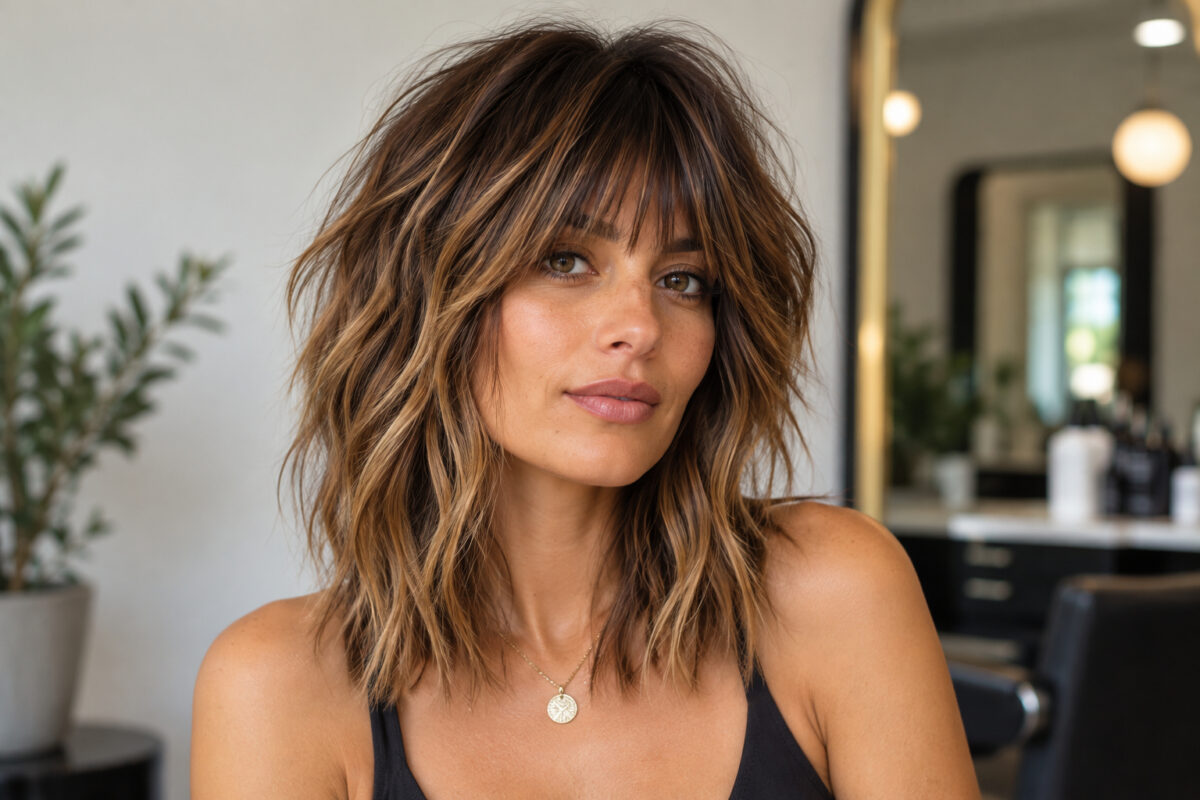
A modern shag haircut is a layered cut with soft, [...]