



How Do I Know If My Flat Iron Is Damaging My Hair? Signs in 2026
Short Answer: The seven clearest signs your flat iron is damaging your hair are: split ends multiplying, dry brittle texture even after conditioning, white nodes along the shaft visible under light, hair that won’t hold a curl or style, dramatic shed at the ends rather than the root, mid-shaft breakage that creates uneven layers, and a burned or smoky smell during styling. Daily use over 365°F (185°C) without heat protectant is the most common cause. The good news is that mild heat damage is recoverable with a bond-repair treatment like K18 or Olaplex plus reduced heat use — but severe damage requires a cut. If you’re seeing three or more signs, book a damage assessment before the breakage spreads.
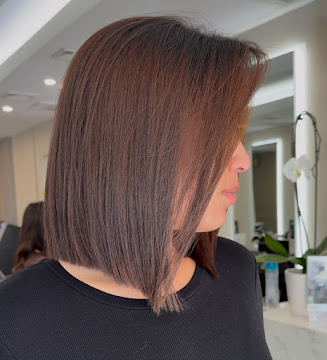
The 7 Signs Your Flat Iron Is Damaging Your Hair
Heat damage doesn’t show up overnight. It accumulates strand by strand, and by the time it’s visible to you in the mirror, the damage at the cellular level has been building for months. These are the signs we look for at Numi & Company in Scarsdale when a client asks whether their flat iron is the problem.
1. Multiplying split ends
A few split ends is normal. A noticeable increase between trims — especially feathered or trident-shaped splits rather than simple Y-splits — is heat damage signaling.
2. Persistent dry, brittle texture
Hair that doesn’t soften even right after deep conditioning has lost its ability to hold moisture. The cuticle is too damaged to seal properly.
3. White nodes along the shaft
Hold a strand up to the light. Small white dots scattered along the length are stress points where the protein structure has weakened. Each will eventually become a break point.
4. Hair won’t hold a curl or style
Healthy hair has elasticity. Damaged hair has lost it. If your curling iron or blow-dry curls drop within an hour despite product, your hair is too compromised to hold shape.
5. Shedding at the ends, not the root
Strands that break in your brush with both ends untorn (not a bulb at one end) are signs of breakage, not natural shedding. The break is happening mid-shaft or near the tips.
6. Uneven layers from mid-shaft breakage
If your hair is breaking off at certain lengths, you’ll see uneven, choppy layers around your face or crown that didn’t come from a haircut.
7. A burned or smoky smell during styling
If you can smell anything when the flat iron touches your hair, you are actively burning protein. This is the most common single sign that the temperature is too high.
What Heat Actually Does to Hair
Hair is built from a protein called keratin, organized into bonds that hold the strand together and the cuticle (the protective outer layer) closed. Heat damage happens at three levels.
At moderate heat (around 300-330°F), water inside the strand boils and escapes, leaving the hair drier. Cuticle scales begin to lift slightly. This is reversible with conditioning and the damage is minimal.
At higher heat (around 350-400°F), the protein bonds that hold the strand together start to break down. The cuticle lifts permanently in patches. This is the temperature most consumer flat irons default to — and the temperature where regular use without heat protectant starts causing visible damage within a few months.
At very high heat (above 400°F), the keratin protein begins to denature — the same way an egg white solidifies when you cook it. Once denatured, that section of the strand cannot recover. The American Academy of Dermatology’s hair care guidance covers the broader picture on protecting hair from styling-tool damage. The salon-side takeaway: the lower you can comfortably style at, the safer your hair stays long-term.

The Safe Flat Iron Temperature for Your Hair Type
The single biggest variable in whether your flat iron is damaging your hair is the temperature you’re using. Most flat irons heat to 450°F (232°C) — and most users have no business going past 350°F. Here’s the matrix we walk clients through.
| Hair type | Max safe temp | Notes |
|---|---|---|
| Fine or damaged hair | 250-300°F | One pass at most. Always use heat protectant. |
| Color-treated hair | 300-330°F | Already chemically processed. Heat compounds damage. |
| Normal/medium thickness | 330-365°F | Most everyday users land here. Heat protectant required. |
| Thick, coarse, or resistant | 365-400°F | Reserve highest temps for textured hair that genuinely needs it. |
| Anything above 400°F | Avoid | Diminishing returns. Damage rises sharply. |
If your flat iron only shows “low/medium/high” instead of degrees, set it to low for fine hair and medium for everything else. Skip the high setting unless your stylist specifically recommends it for your texture.
How Heat Protectant Actually Works
Heat protectant isn’t a marketing add-on. It’s a thin polymer layer that absorbs and disperses heat, lowering the temperature the hair shaft actually experiences. A good heat protectant reduces effective temperature by 30-50°F. That’s the difference between safe styling and breakage over time.
The catch is that most people use it wrong. The two most common mistakes:
- Spraying onto dry hair right before the flat iron. Most heat protectants are designed to be applied to damp hair, before blow-drying. By the time the flat iron touches, the protective film is set. Spraying onto bone-dry hair seconds before heat doesn’t form the same protective layer.
- Using too little. A few light spritzes across the canopy isn’t enough. Section the hair and apply lightly but evenly to every section you plan to iron, including the layers underneath.
If you’ve been styling without heat protectant or applying it incorrectly, you’ve been at higher temperatures than the dial reads.
How Often Is Too Often?
Frequency matters as much as temperature. Even with a perfect 330°F setting and proper heat protectant, daily flat ironing accumulates damage over months. The hair doesn’t have time to recover between heat exposures.
The honest target for healthy hair:
- 2-3 times per week max for most hair types
- 1 time per week or less for fine, color-treated, or already-damaged hair
- Touch-up only on the days between — passing the iron only over flyaways or specific sections, not full lengths
A smoothing service like a keratin treatment, Brazilian blowout, or Magic Sleek can dramatically reduce the need for daily flat ironing — clients who switch often find they’re going from five flat-iron days per week to one or two. We cover the trade-offs of those services in our piece on why hair can be frizzy after a keratin treatment, which also explains how the treatments change everyday styling needs.
What to Do If You’ve Already Damaged Your Hair
If you’re seeing three or more of the seven signs above, the good news is that there’s a recovery path — but the steps matter. Trying to deep-condition your way out of heat damage doesn’t work because conditioning doesn’t rebuild broken protein bonds.
- Get a bond-repair treatment. K18 and Olaplex are the two leading in-salon treatments that actually reconnect broken keratin bonds rather than just coating the cuticle. They’re meaningfully different from conditioning treatments. Our K18 treatment page covers what to expect from that service specifically, and the Olaplex treatment page covers the alternative.
- Cut off the worst damage. No treatment fully reverses severe damage. Trimming the most compromised inches gives the rest of the hair a chance to recover with the new growth.
- Drop heat tool frequency dramatically. Down to once per week or less while the hair recovers — usually a 4-6 month process.
- Lower the temperature when you do use heat. Even if you previously styled at 400°F, drop to 300-330°F during recovery.
- Use heat protectant correctly — on damp hair before blow-drying, plus a fresh light layer before flat ironing.
- Weekly bond-repair treatment at home as maintenance between salon visits.
For a deeper breakdown on the damage-recovery sequence, our piece on how to repair damaged hair walks through the full home + salon protocol.
When to Just Get the Cut
Some damage is past the point of treatment. The honest signs that a cut is the right next step:
- The bottom three to four inches feel like wire or straw no matter what you put on them
- You can see clear color or texture difference between damaged ends and healthier upper hair
- The hair is breaking off at the same length across your head — a sign of widespread mid-shaft damage
- You’ve been doing bond-repair treatments for three months without improvement
Cutting an inch or two off the bottom and recommitting to lower-heat, lower-frequency styling will give you healthier hair faster than trying to nurse compromised ends back. Most clients who finally make this call wish they’d done it six months earlier.
Get a damage assessment at Numi
If you’re not sure whether your flat iron is the issue or how deep the damage goes, twenty minutes with one of our stylists can answer it. We look at the cuticle condition, elasticity, and breakage pattern — then walk you through whether a treatment plus reduced heat will recover your hair or whether a cut is the smarter path. Damage assessments are free and don’t require a service booking.
Call 914-574-6402 or book online to schedule.
FAQ
Can heat damage from a flat iron be reversed?
Mild to moderate heat damage can be substantially improved — but not technically reversed. Once protein bonds break, the strand is permanently altered. What bond-repair treatments like K18 and Olaplex do is create new bonds where the broken ones were, restoring much of the strength and elasticity. The result looks and feels reversed even if it isn’t molecularly identical to the original. Severe damage (the bottom three to four inches feeling like wire) is past the point of treatment and needs to be cut off. The hair growing in from the scalp is healthy and will replace damaged length over time.
What’s the safest temperature for a flat iron?
The right temperature depends on your hair type. Fine or already-damaged hair should stay at 250-300°F. Color-treated hair tolerates 300-330°F. Normal medium hair handles 330-365°F. Thick, coarse, or resistant hair can use 365-400°F but rarely needs higher. Above 400°F, damage rises sharply with minimal styling benefit. If your flat iron only shows low/medium/high without degrees, “low” is typically 250-300°F, “medium” is 300-380°F, and “high” is 380-450°F. Most users should stay on medium or below.
Does using a flat iron every day damage your hair?
Yes, in almost every case. Even with perfect temperature settings and heat protectant, daily heat exposure accumulates over weeks and months. The hair doesn’t have time to recover between sessions, and small amounts of damage compound. The healthier target is 2-3 flat iron sessions per week max — 1 per week for fine or color-treated hair. If you feel like you need daily styling to look professional, a salon smoothing service (keratin, Brazilian blowout, Magic Sleek) is usually the better long-term answer than daily flat ironing.
Is heat protectant actually necessary?
Yes — and not optional if you flat iron regularly. A quality heat protectant reduces effective shaft temperature by 30-50°F, which is the difference between safe styling and cumulative damage. The two common application mistakes are spraying onto dry hair right before the flat iron (most protectants need to be applied to damp hair before blow-drying) and using too little. Section your hair and apply evenly to every section you’ll be ironing. If you’ve been skipping heat protectant or applying it sparsely, you’ve been styling at a higher effective temperature than the dial reads.
How do I know if my flat iron is the problem versus something else?
The signature pattern of flat-iron damage is concentration at the lengths and ends rather than at the root — dry, brittle, white-noded strands that get worse the further from the scalp you look. If the damage pattern is uniform across the hair length (including hair close to the scalp), the cause is usually different: chemical processing, hormonal change, nutritional issue, or an underlying scalp condition. A stylist can usually identify the cause from a five-minute visual assessment. Bring photos of how your hair looks first thing in the morning and at the end of the day — the difference helps identify whether heat tools are the main contributor.
Categories
Recent Posts

Micro bangs are a very short fringe cut well above [...]
A 90s blowout is a blow dry style with big, [...]

A modern shag haircut is a layered cut with soft, [...]