



Why Is My Hair Frizzy After a Keratin Treatment? Causes & Fixes
Short Answer: If your hair is frizzy after a keratin treatment, the most common cause is something that happened in the first 72 hours after your appointment — water exposure too soon, the wrong shampoo, a tight ponytail, or a hair tie at the wrong moment. Keratin treatments need an undisturbed window to fully bond to the hair shaft, and even small interruptions in that window can compromise the result. The second most common cause is the wrong product or technique for your hair type — particularly on highly textured, color-treated, or chemically processed hair, where a single keratin system may not be strong enough to fully smooth what’s there. And occasionally, it’s something none of us controlled: your water. Hard water, well water, and high-chlorine water can all reactivate frizz on otherwise perfectly treated hair. The good news is that almost all of these have a fix — sometimes immediate, sometimes a touch-up, sometimes just better products at home.
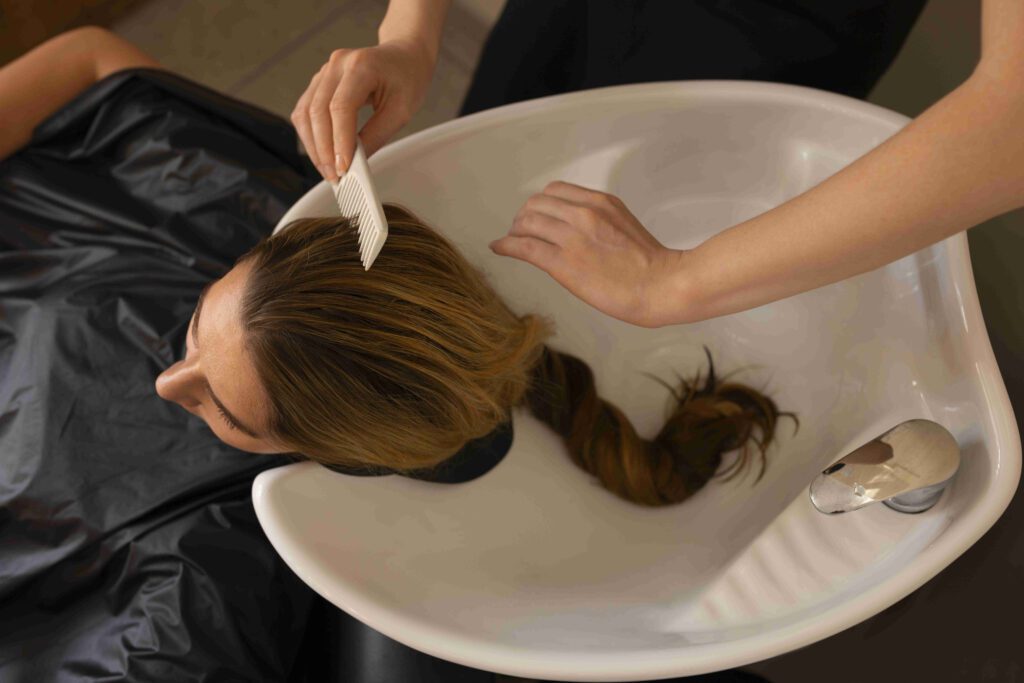
Cause 1: The First 72 Hours Got Interrupted
This is the cause we see most when clients ask why is my hair frizzy after a keratin treatment. The aftercare window is short, but it’s strict, and even well-intentioned slips can cost you smoothness.
What goes wrong:
- Hair gets wet too soon (a workout sweat-through, a surprise rainstorm, a kid in the bath, a steamy shower with hair down)
- Hair gets tucked behind ears, clipped up, or tied back — leaving a visible dent or kink that frizzes outward
- Sleeping on cotton, especially with damp or recently-treated hair, creates friction that disrupts the seal
- A hat or headband presses lines into the hair before it’s set
For traditional keratin systems, the post-treatment window is usually 48 to 72 hours where you can’t wash, tie back, or significantly bend the hair. Some newer systems and express formulas are more forgiving. If you’re not sure which one you got, your stylist can tell you exactly — and if you weren’t given specific aftercare instructions, that’s a red flag about the salon.
The fix: If you’re within the first week and you’ve already broken the rules, sometimes a return visit for a “re-seal” can help. Beyond that, you’ll typically have to ride out the rest of the treatment with the frizz you have, and lean on your at-home products to smooth what you can.
Cause 2: The Wrong Shampoo and Conditioner
The single fastest way to strip a keratin treatment is sulfates. Most commercial drugstore shampoos contain sodium lauryl sulfate or sodium laureth sulfate as their primary cleansing agent — and those detergents are exactly what’s needed to scrub the keratin proteins right back off the cuticle.
What goes wrong:
- Using the shampoo that was already in your shower instead of switching to a sulfate-free, sodium-chloride-free formula
- Co-washing with conditioners that contain heavy silicones, which can build up and dull the smoothing effect
- Using clarifying shampoos (which are designed to strip)
- Salt sprays, sea salt texturizers, or chlorinated pool water
The fix: Switch your home routine before you book, not after. A sulfate-free, sodium-chloride-free shampoo and a hydrating conditioner are non-negotiable for protecting your investment. Your stylist can recommend brands they trust — and we keep ours stocked at the salon for clients who don’t want to guess.
Cause 3: The Wrong Product for Your Hair Type
Not every keratin is built for every hair type, and matching the system to the client is where stylist experience really earns its keep when it comes to why is my hair frizzy after a keratin treatment.
What goes wrong:
- A standard keratin used on tightly coiled or very coarse curl patterns that needed a stronger smoothing system
- A formaldehyde-free system used on a client who needed the structural strength of a traditional Brazilian Blowout — or vice versa for a client who couldn’t tolerate the chemistry
- An “express” or shorter-duration formula applied to hair that needed a full traditional service for lasting results
- A keratin layered over a recent color, relaxer, or perm without enough recovery time, leaving the shaft too compromised to hold the bond evenly
The result is uneven smoothing — some sections lay flat, others frizz back up — or smoothing that fades within weeks instead of months.
The fix: This one requires a stylist consultation. If you’ve had a keratin that didn’t take well, the answer isn’t usually to redo the same treatment — it’s to figure out which system would actually work for your hair. Our breakdown of the difference between keratin and a Brazilian Blowout is a helpful starting point, and the keratin express treatment post explains where shorter-duration options fit. For broader context on what professional smoothing chemistry actually does — and the FDA’s guidance on hair smoothing products that release formaldehyde when heated is the most authoritative read. If you’d like to see which smoothing systems we offer, our keratin treatment menu walks through Brazilian Blowout, Keratin Complex, Lasio, and Magic Sleek side by side.
Cause 4: Your Water
This one surprises clients. Hard water (high in calcium and magnesium minerals), well water (often high in iron), and high-chlorine municipal water can all deposit on the hair shaft and reactivate frizz on otherwise well-treated hair. In parts of Westchester, mineral content in tap water is real — we see it in the hair we work with every day.
What goes wrong:
- A new home with different water than where you got your last keratin
- Frequent swimming in chlorinated pools
- Showering after a workout at a gym with hard water you don’t get at home
- A water heater that’s added mineral buildup over time
The fix: A shower head filter is a small investment that does noticeable work for keratin maintenance. Chelating shampoos (used sparingly, not every wash) can pull mineral buildup. And a leave-in conditioner with humidity protection helps your hair fight back against the elements between washes.
Cause 5: Humidity and Sweat
Keratin treatments make hair more humidity-resistant, not bulletproof. If you went from getting your treatment in a dry climate to a humid one — or if summer just hit Westchester — some frizz return is normal, not a failure.
What goes wrong:
- Working out daily with no anti-humidity layer
- Outdoor activity in peak humidity months
- Steam from cooking, showering with the door closed, or saunas
- Damp hair tied up after a sweat session, then released — that pattern bakes frizz in
The fix: A humidity-blocking serum or anti-frizz cream is your friend. Reapply on humid days. And if you sweat heavily during workouts, blow-dry hair smooth afterward instead of leaving it damp and tied back.
Cause 6: Time and the Natural Fade
This isn’t really a problem — it’s the treatment doing exactly what it’s designed to do. A traditional Brazilian Blowout typically lasts 10 to 12 weeks; a full keratin treatment can last 3 to 5 months depending on hair type and aftercare. Frizz returning at the natural endpoint isn’t a failure; it’s the schedule.
Our post on how long a Brazilian Blowout lasts walks through what to expect in terms of timeline, and you can read about how often you can get keratin treatments for a maintenance plan that keeps frizz at bay long-term.
How to Tell Which Cause Is Yours
A quick diagnostic:
- Frizz started immediately or within the first week → almost always an aftercare slip in the 72-hour window
- Frizz appeared in patches, not evenly → wrong product for your hair type, or uneven application
- Frizz started after a move, vacation, or new gym → water or environment
- Frizz returned gradually over 8 to 12 weeks → natural fade, time for a maintenance touch-up
- Frizz only on humid days or after workouts → environmental, fixable with the right at-home products
If you’re still not sure, bring a photo of the frizz pattern to your stylist. We can usually trace it back to a cause within a few questions. And if you’re seeing significant hair loss or scalp irritation alongside the frizz, that’s worth a conversation with a board-certified dermatologist — those symptoms can have causes that go beyond what a stylist should diagnose.
FAQ
How long does it take for keratin to settle in?
For traditional keratin systems, the post-service window is 48 to 72 hours where you shouldn’t wash, tie back, or significantly bend the hair. During that window the keratin proteins are bonding to the cuticle, and disruption — water, hair ties, hats, sleeping on cotton — can compromise the final result. Some newer express formulas have shorter windows (sometimes as little as 8 hours), so confirm with your stylist exactly what your specific system requires. Following the window precisely is the single biggest predictor of how smooth the treatment looks at month two and beyond.
Can I fix a botched keratin treatment at home?
Sometimes, depending on the cause. If it’s mild frizz from a humidity slip or product mistake, a sulfate-free routine plus a humidity-blocking serum often improves things noticeably within a week or two. If the smoothing is uneven, patchy, or barely there, home products usually can’t recover what’s missing — that’s a stylist conversation. Some salons offer a “re-seal” within the first week or two after the original service if you can identify and fix the cause. Don’t pile on more product or treatments at home — that often creates buildup that makes the frizz worse.
Why is only part of my hair frizzy after keratin?
Patchy frizz almost always points to either uneven application, the wrong system for that section’s texture, or a section that didn’t get sealed properly during the flat-iron step of the service. Color-treated, previously chemically processed, or particularly coarse sections sometimes need extra processing time or a stronger formula than the rest of the head. If you’re seeing patchy results, the answer usually isn’t a redo of the same treatment — it’s a consultation to figure out what would actually hold across all your hair types in one session.
Does hard water ruin a keratin treatment?
Not immediately, but over time it can shorten the treatment’s lifespan and reactivate frizz. Hard water deposits minerals like calcium, magnesium, and iron onto the hair shaft. Those minerals coat the cuticle in a way that disrupts the keratin’s smoothing effect and can dull shine within weeks. A showerhead filter is the simplest fix, and a periodic chelating shampoo (used sparingly because it can also strip the keratin) can pull existing buildup. Clients who moved from soft to hard water often see the difference after a few weeks.
When should I see a dermatologist instead of my stylist?
If you’re experiencing significant hair loss, scalp irritation, persistent itching, burning, or sores after a keratin treatment, those symptoms can have causes that go beyond what a stylist should diagnose — chemical sensitivity, allergic reaction, or an underlying scalp condition that the treatment may have aggravated. A board-certified dermatologist can evaluate scalp health and rule out conditions that aren’t a stylist’s domain. Frizz alone is a stylist conversation; symptoms that affect scalp health or shedding are a medical one.
Categories
Recent Posts

Micro bangs are a very short fringe cut well above [...]
A 90s blowout is a blow dry style with big, [...]

A modern shag haircut is a layered cut with soft, [...]