



How Often Should I Use Purple Shampoo for Blonde Hair? Real Answer in 2026
Short Answer: Most blondes should use purple shampoo once or twice a week — not every wash. The right cadence depends on your tone: cool ash and platinum blondes need it more often (1-2 times per week), warm and honey blondes need it less (once every 7-14 days), and natural blondes who don’t lift very light usually don’t need it at all. Leave it on for 1-3 minutes, never longer. The two biggest mistakes are overusing it (which makes blonde look dull, lavender, or dingy) and using it on dry, porous hair (which over-deposits). If your blonde looks gray or purple-tinted, you’re using it too often. If it’s brassy within days of washing, you’re either using it too rarely or your underlying tone has shifted.
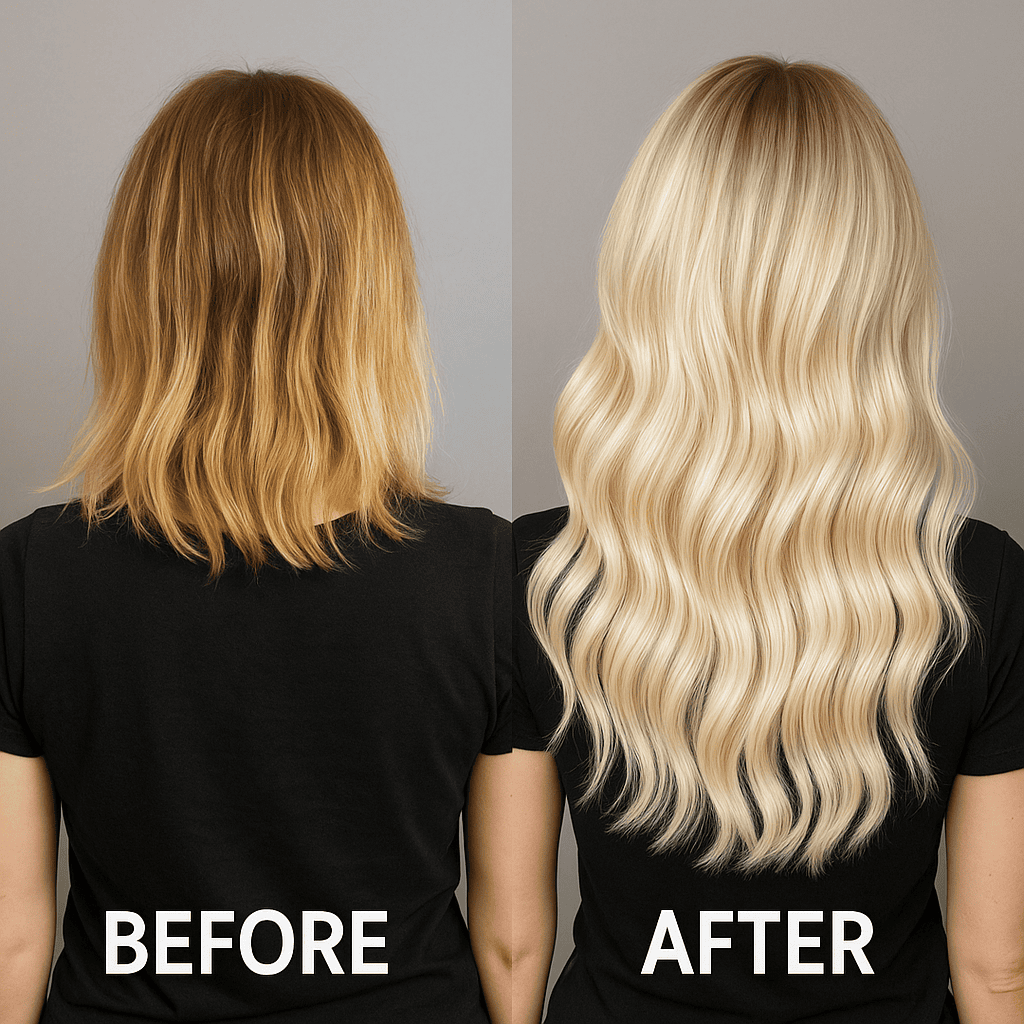
What Purple Shampoo Actually Does
Purple shampoo works on a simple color-theory principle: purple sits opposite yellow on the color wheel. When purple pigment deposits on yellow-toned hair, the two cancel each other out, neutralizing the brassiness and revealing a cooler, brighter blonde underneath.
It’s important to understand what purple shampoo isn’t doing. It isn’t lightening your hair. It isn’t repairing damage. It isn’t removing color — it’s depositing a small amount of new color (purple-violet pigment) onto the cuticle. That pigment sits on the surface and neutralizes warm tones until it washes out, usually within 2-4 washes.
The implication: purple shampoo is a corrective product, not a maintenance product. The question of how often purple shampoo for blonde hair is really a question of how much warm shift you need to correct between salon visits.
The Right Frequency by Blonde Type
Different blondes need different cadences. Here’s the matrix we walk clients through at Numi & Company in Scarsdale.
| Blonde type | Recommended frequency | Notes |
|---|---|---|
| Platinum / icy blonde | 1-2 times per week | Cool tones fade fastest; needs the most correction |
| Cool ash blonde | 1-2 times per week | Same logic — ash tones break down to brass quickly |
| Balayage / lived-in blonde | Every 7-10 days | Less frequent because dimensional color hides minor warmth naturally |
| Honey / warm blonde | Every 10-14 days | Warm tones are intentional — only correct if it shifts orange |
| Natural light blonde | Rarely or never | No depigmentation to correct; can over-deposit purple |
| Highlights on dark base | Once every 7-14 days | Only on the lightened sections — easier to do at the salon |
If you’re not sure which type fits you, the simplest test is what your hair looks like 2-3 weeks after a salon visit. If it shifts noticeably yellow or brassy in that time, you’re a candidate for regular purple shampoo. If it stays close to where it started, you don’t need it often.
The 4 Signs You’re Using It Too Often
Overusing purple shampoo is one of the most common ways well-intentioned at-home maintenance backfires. Watch for these warning signs.
1. Your blonde looks lavender or violet
Visible purple tint, especially in fluorescent or natural light. Means too much pigment is depositing without enough wash-out between uses.
2. Hair looks dull or gray rather than bright
Purple over-tone can dim natural light reflection. Healthy blonde should look luminous; over-toned blonde looks flat.
3. Roots and lengths don’t match
Older lengths absorb more pigment than fresher root growth. Result: the lengths go cool/dingy while the roots stay warm.
4. Hair feels drier than usual
Most purple shampoos are slightly stripping. Daily use compounds dryness. Your conditioner stops keeping up.
If you’re seeing one or more of these, cut purple shampoo back to once every 10 days, follow with deep conditioner each time, and watch what happens over 3-4 weeks. Most over-tone clears as the deposited pigment washes out.
The 4 Signs You’re Not Using It Often Enough
The opposite mistake is letting brass take over. Signs you need to add purple shampoo to your routine — or use what you have more often:
- Yellow tones visible within a week of a salon visit. Color is shifting fast and purple shampoo is the easiest at-home correction.
- Brassy bands on the ends. The most-processed parts of your hair fade warm first.
- Color looks great in fluorescent salon light, off in natural sun. Sun reveals warm undertones earlier than indoor light.
- You live with hard water. Mineral deposits accelerate warmth — Westchester clients often need a higher purple-shampoo cadence to keep tone steady. We covered the broader connection in our piece on why balayage fades so fast, where hard water is one of the top causes.
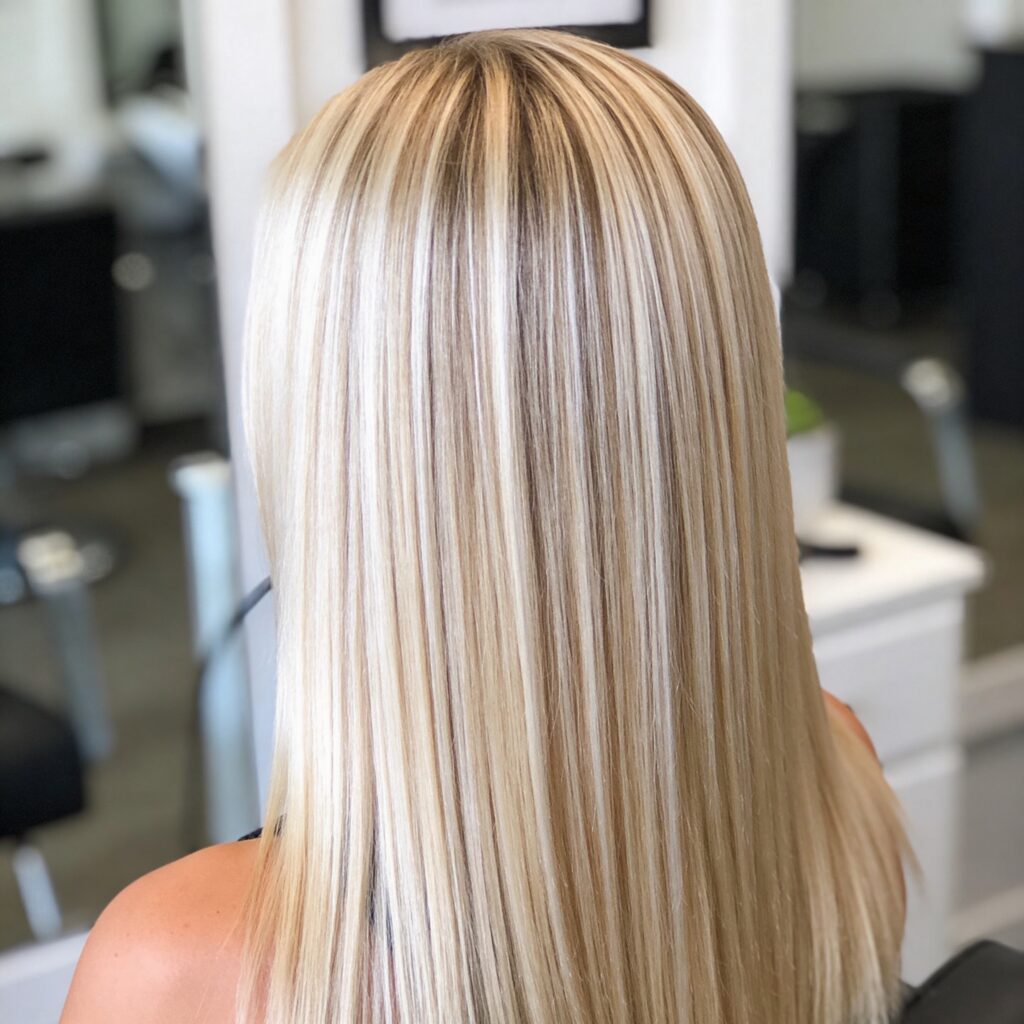
How to Use Purple Shampoo Correctly
Frequency is only half the conversation. How you apply purple shampoo matters as much as how often.
- Apply to wet hair like a regular shampoo. Lather and distribute evenly.
- Time it: 1-3 minutes for most blondes. Cool ash and platinum blondes can leave it on longer (up to 5 minutes if your hair is fresh and not porous). Warm blondes and balayage clients should stay closer to 1-2 minutes.
- Rinse thoroughly. Residual purple pigment in your hair is what causes the lavender over-tone.
- Follow with a moisturizing conditioner. Purple shampoo is slightly drying. The conditioner restores the moisture balance.
- Use on damp, not dry hair. Damp hair has less ability to absorb excess pigment than dry porous hair.
The bigger trap: leaving purple shampoo on for 10-15 minutes “for extra correction.” This almost never produces a better result. The pigment fully deposits within the first 3 minutes — extra time just means extra over-tone.
Why a Salon Glaze Often Beats Purple Shampoo
If you find yourself relying on purple shampoo more and more between salon visits, the more elegant solution is usually a glaze. A glaze is a 20-30 minute in-salon treatment that re-tones the hair with semi-permanent color — same color-theory principle as purple shampoo, but in a controlled, professional application.
A glaze every 4-6 weeks accomplishes what purple shampoo is trying to do at home, but more evenly and longer-lasting. The trade-off is a salon visit; the upside is that you stop micro-managing brass between washes and your blonde stays consistent. Our glaze service page covers what to expect, and our breakdown of gloss vs glaze vs toner walks through the different refresh options.
The American Academy of Dermatology’s general hair care guidance covers the basics on color-treated hair maintenance — the salon-side translation is that less frequent, professionally-controlled tone refreshes usually preserve blonde better than aggressive at-home routines.
What If Your Blonde Already Looks Off?
If you’re reading this because something already shifted — purple over-tone, gray cast, dingy color — the recovery moves are straightforward.
If it’s over-toned (lavender or gray): Stop using purple shampoo entirely for 2-3 weeks. Use a clarifying shampoo twice (a week apart) to lift accumulated purple pigment. The over-tone should clear naturally as it washes out.
If it’s brassy or yellow: Use purple shampoo at the recommended cadence for your tone, but also schedule a glaze if it’s been more than 6 weeks since your last salon visit. Brass that doesn’t clear with purple shampoo at home is brass that needs salon-level toning.
If it’s uneven (root tone vs. length tone differ): This usually needs a salon visit. At-home products can’t address uneven porosity well. A colorist can apply tone selectively to where it’s actually needed. If the unevenness is severe, our piece on how to fix bad hair color covers what a color correction service looks like.
Book a blonde tone consultation at Numi
If your blonde isn’t sitting where you want it and you’re not sure whether the answer is changing your at-home routine, scheduling a glaze, or coming in for a full refresh, a free consultation is the fastest path to clarity. We’ll look at your current tone, talk through your wash routine, and walk you through the right next step.
Call 914-574-6402 or book online to schedule.
FAQ
Can I use purple shampoo every day on blonde hair?
Daily use is almost always too much. Purple shampoo deposits pigment with every wash, and daily use causes over-tone, dryness, and a flat, dingy appearance within a few weeks. The exception is clients with very porous hair who are specifically trying to neutralize aggressive brass right after a service — but even then it’s a short-term correction, not a routine. The healthier rhythm for most blondes is 1-2 times per week max, alternating with a moisturizing color-safe shampoo on other wash days.
How long should I leave purple shampoo on my hair?
For most blondes, 1-3 minutes is plenty. Cool ash and platinum tones can go up to 5 minutes if hair is healthy and not porous. Warm or honey blondes should stay closer to 1-2 minutes to avoid over-correction. The popular advice to leave purple shampoo on for 10-15 minutes almost always backfires — the pigment fully deposits within 3 minutes, and extra time only causes lavender over-tone and dryness. If you need more correction than 3 minutes provides, the answer isn’t more time, it’s a salon glaze.
Will purple shampoo lighten my hair?
No — purple shampoo doesn’t lighten or lift hair color. It deposits a small amount of purple-violet pigment that neutralizes yellow undertones, which can make your blonde look brighter and cleaner. But the actual hair level (how light the hair is) doesn’t change. If you want lighter hair, you need a lightening service like highlights, balayage, or a single-process lift. Purple shampoo refines the tone you already have.
Can I use purple shampoo on gray or silver hair?
Yes — and many gray and silver clients benefit more from purple or blue shampoo than blondes do. Gray hair loses pigment and is highly susceptible to picking up warm tones from sun, hard water, and product buildup. A purple or blue shampoo once or twice a week keeps gray hair bright and cool-toned instead of yellow. Blue shampoos work better than purple for hair that’s mostly silver, because the tone is shifting from a darker baseline. Purple works better when there’s still a blonde or light brown component to the hair.
Why does my purple shampoo turn my hair purple?
Two common causes. First, porous hair (damaged, lightened, color-treated) absorbs more pigment than healthy hair, so even normal use can over-deposit. Second, leaving it on too long allows excess pigment to bind to the cuticle. The fix: shorter timing (1-2 minutes), use less frequently (every 10-14 days instead of every wash), and apply to less-porous areas (avoid the most-processed ends if those are absorbing more than the rest). If your hair has already turned purple, a clarifying shampoo used twice a week apart will lift the over-tone within 2-3 washes.

Categories
Recent Posts

Micro bangs are a very short fringe cut well above [...]
A 90s blowout is a blow dry style with big, [...]

A modern shag haircut is a layered cut with soft, [...]