



Ghost Layers Haircut (What to Ask For at the Salon)
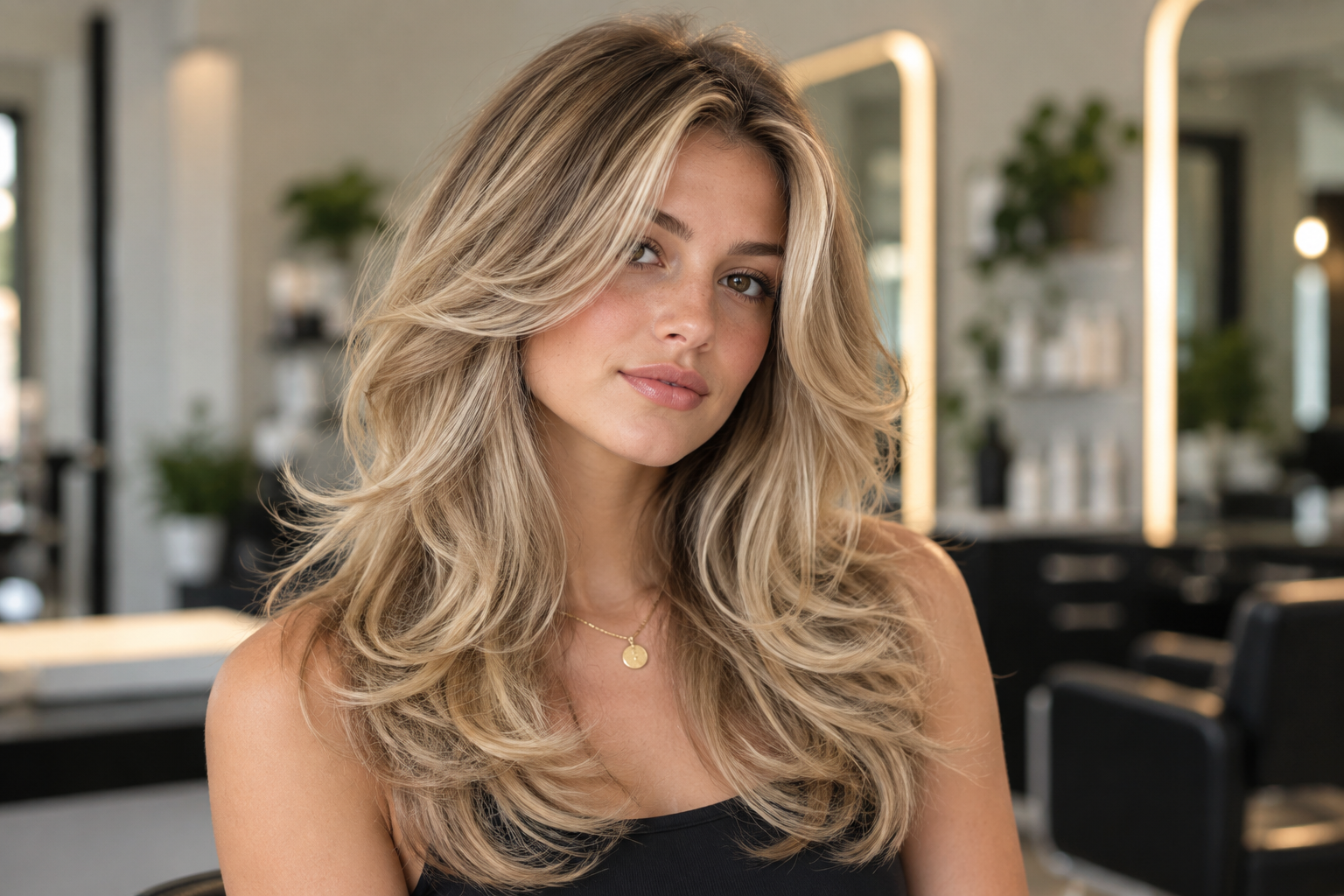
Ghost layers are a modern haircut technique that adds volume and movement to your hair without cutting any visible layers into the outside shape. They sit hidden beneath the top section of your hair, which is why they are called ghost or invisible layers. The result is fuller, bouncier hair that still looks one length.
If you have ever asked for layers and ended up with a choppy, stepped look you hated, ghost layers are the fix. Celebrity stylists like Jonathan Van Ness are cutting them. Stylists on TikTok have given the technique over 6 million posts under the #ghostlayers hashtag. And clients love them because they solve two of the most common hair complaints at once: heavy, flat hair and the fear of losing length.
Here is what ghost layers actually do, who they work on, and what to ask your stylist for at your next appointment.
What Are Ghost Layers?
Ghost layers are fine, internal layers cut beneath the top section of your hair. Unlike traditional layers that sit on the outside of your hair and create visible steps, ghost layers hide underneath the longest pieces. You cannot see where they start or end. All you see is the effect: more body, more movement, more shape.
The technique uses two main cutting methods: point cutting and slide cutting. A skilled stylist cuts at sharp angles to remove weight from inside the hair without shortening the outer length. Done well, the layers are completely invisible when your hair is down.
Think of it like contouring for your hair. The layers are doing the work underneath, but the finished look still reads smooth and seamless.
How Ghost Layers Differ From Traditional Layers
- Traditional layers: Cut on the outside of the hair. Clearly visible. Create stepped shape.
- Ghost layers: Cut inside the hair. Hidden under the top section. Create invisible volume.
- Long layers: Soft layers that still show, but blend gradually. Somewhere between the two.
- Butterfly cut: Heavy face-framing layers plus longer lengths. Creates a visible winged effect.
Ghost layers are the most subtle layering option on the menu. If you want your haircut to look different, pick something else. If you want your hair to feel different but look the same, ghost layers are perfect.
Who Should Get Ghost Layers?
Ghost layers are one of the most flexible cutting techniques out there. They work on a wide range of hair types and lengths, with a few exceptions.
They work best on:
- Long hair (shoulder length or longer)
- Fine or thin hair that looks flat (ghost layers create the illusion of volume)
- Thick, heavy hair that feels stuck or weighed down (ghost layers remove bulk)
- One-length hair that has lost its shape
- Anyone who wants a change without looking like they got a haircut
They are less ideal for:
- Very short hair (there is not enough length to hide internal layers)
- Anyone who wants a dramatic, visible change
- Hair that needs structural shaping (like a bob or a pixie)
Why Stylists Love Them
Ghost layers fix two problems that used to require separate services. For thin hair, stylists used to recommend product buildup or layered shaping that sacrificed length. For thick hair, they used to recommend thinning shears or heavy layers. Ghost layers do both jobs with one technique. Remove weight where hair feels heavy. Create the illusion of volume where hair feels flat.
How to Ask Your Stylist for Ghost Layers
This is the part that matters. Not every stylist uses the term “ghost layers.” Some call them invisible layers, internal layers, or hidden layers. If you walk into a salon and just say “layers,” you will probably end up with visible ones, which is the opposite of what you want.
When you sit in the chair, tell your stylist:
- You want to keep your current length completely (this is critical)
- You want invisible or internal layers that sit under the top section
- You want more movement, volume, or weight removed, depending on your hair type
- You do not want any visible steps or obvious layers in the outer shape
Bring reference photos. Pictures help more than words here, because the cut is invisible in the final look. A photo of someone with full, swishy, one-length hair is what you want to show.
Because ghost layers require precise cutting with point-cutting and slide-cutting techniques, booking with an experienced stylist matters. This is not a cut to try at a new salon or with a junior stylist. Check out Numi’s women’s haircut service for pricing and stylist options.
How to Style Ghost Layers at Home
The best part about ghost layers is how easy they are to live with. The cut does most of the work. Styling is just about bringing the hidden layers to life.
For Air-Dried Hair
Ghost layers show off natural texture beautifully. If you have waves or a natural bend, you can air dry and get soft, dimensional hair with minimal effort.
- Apply a cream-based styling product to damp hair from mid-lengths to ends.
- Scrunch gently or twist sections to encourage natural bend.
- Let air dry without touching your hair too much (this prevents frizz).
- Finish with a light oil or serum on the ends for shine.
For a Blowout
A blowout highlights the movement ghost layers add. This is where the invisible shaping really shows up.
- Apply heat protectant and a volumizing product to damp hair.
- Blow dry upside down at the roots for lift.
- Use a large round brush to dry the rest of your hair, directing the brush away from your face.
- Finish with a cool blast to set the shape.
For Sleek, Straight Hair
Even pin-straight styling shows off the benefits of ghost layers. The cut prevents the flat, weighted look that straight hair sometimes falls into.
- Blow dry smooth with a paddle brush.
- Flat iron in small sections for maximum shine.
- Finish with a shine spray or oil on the mid-lengths and ends only.
For more inspiration, celebrity beauty outlets like Refinery29 covered Jonathan Van Ness cutting ghost layers and explained how the technique shapes different hair types.
How Often Should You Trim Ghost Layers?
Ghost layers are one of the lowest-maintenance cuts out there. Because the layers are hidden, they do not create an obvious grow-out line. Your hair grows out evenly, and the cut stays flattering for months.
Most clients come in every 10 to 12 weeks for a refresh. If you are growing your hair out, you can stretch the interval to 14 weeks without losing the shape. Compare that to a traditional layered cut, which can look awkward after 6 weeks.
If you have ghost layers combined with curtain bangs or face-framing pieces, those will need more frequent trims (every 4 to 6 weeks for bangs, every 8 to 10 weeks for face framing).
Are Ghost Layers Worth It?
For the right person, yes. Here is what makes this cut stand out:
- You keep your length
- You gain real, visible volume and movement
- The cut grows out gracefully with no awkward phase
- It works on straight, wavy, and curly hair
- You can style it sleek, wavy, or air-dried and it looks good every way
The only caveat is that ghost layers require a skilled cutter. This is not a technique to try at a discount salon or with a new stylist who has not done them before. Precision matters. Done well, ghost layers are the smartest haircut on the menu. Done poorly, they just thin out your hair and you lose both volume and length.
Ready to Try Ghost Layers?
If you are ready to try ghost layers, Numi Hair Salon in Scarsdale has you covered. Our stylists are trained in the precision techniques this cut requires, and they will customize the placement based on your hair type, texture, and length goals. Book your appointment at Numi Hair Salon and bring your favorite reference photos with you.
Categories
Recent Posts

Micro bangs are a very short fringe cut well above [...]
A 90s blowout is a blow dry style with big, [...]

A modern shag haircut is a layered cut with soft, [...]