



How Does Diet Affect Thinning Hair?
Wondering how does diet affect thinning hair? The short version: what you eat won’t override genetics, but nutritional gaps can absolutely thin your hair, and filling them can strengthen it. Protein, iron, and a handful of key vitamins do the heavy lifting.
Short Answer
Diet affects thinning hair because your follicles need steady fuel to grow. A shortfall in protein, iron, biotin, zinc, or vitamins A, C, D, and E can disrupt the growth cycle and trigger shedding. Eating enough protein, iron-rich foods, and hydrating produce supports thicker growth, while excess sugar, heavily processed food, and alcohol work against it. Diet changes take about 8 to 12 weeks to show, so it’s a long game, not an overnight fix.
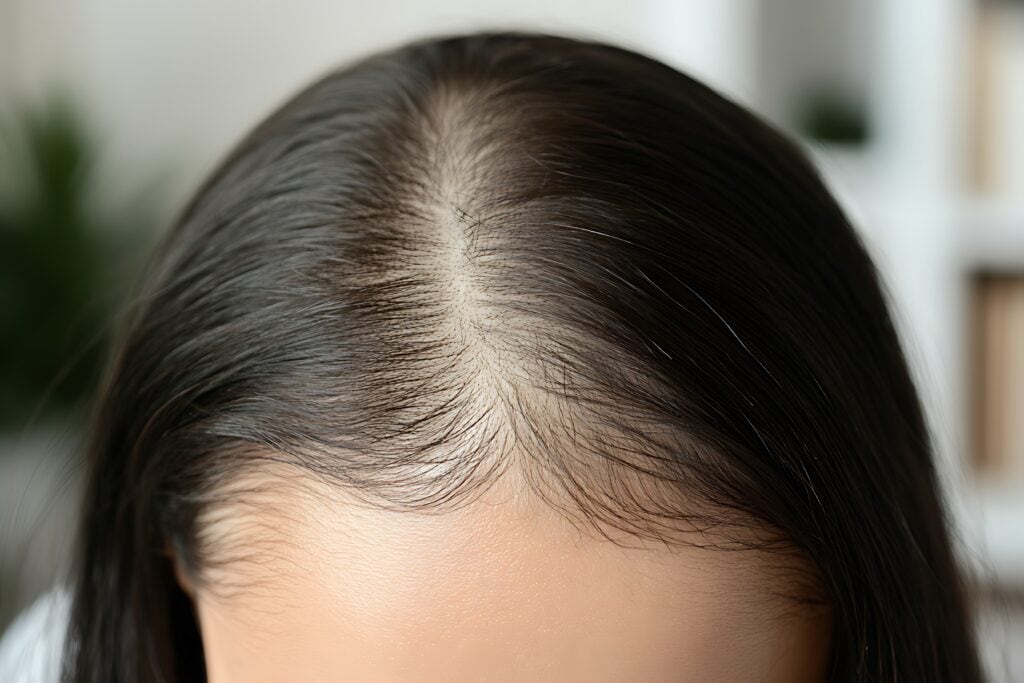
Can Your Diet Really Cause Thinning Hair?
Yes, it can. Genetics and aging are the biggest drivers of thinning, but your hair is one of the fastest-growing tissues in the body, so it’s sensitive to what fuels it. When your diet runs short on the nutrients follicles need, hair can shift into shedding mode.
The American Academy of Dermatology lists a healthy, balanced diet among the everyday habits that support healthy hair. The flip side is also true: crash diets and nutrient gaps are a common, and often reversible, cause of shedding.
Essential Nutrients for Hair Health
These are the nutrients that matter most for keeping hair thick and growing:
- Vitamin A: helps the scalp produce sebum and supports follicle cell growth. Find it in carrots, sweet potatoes, and leafy greens.
- Biotin: the “hair vitamin,” needed to build keratin. Eggs, nuts, avocados, mushrooms, and whole grains all deliver it.
- Vitamin C: drives collagen production and boosts iron absorption. Load up on citrus, strawberries, and kiwi.
- Vitamin E: an antioxidant that protects follicles from oxidative stress. Almonds, sunflower seeds, and avocados are top sources.
- Iron: low iron is one of the most common nutritional causes of shedding. Pair lean meats and legumes with vitamin C to absorb more.
- Zinc: supports the growth cycle and scalp health. Found in eggs, seeds, and whole grains.
What Foods Help Prevent Hair Loss?
A few standout foods pack several hair nutrients at once:
- Salmon and oily fish: omega-3 fats plus vitamin D, both tied to follicle cycling. Mackerel and sardines count too.
- Spinach and leafy greens: iron, folate, and vitamins A and C in one bite.
- Eggs: a rich source of protein, biotin, zinc, and selenium.
- Sweet potatoes: beta-carotene (vitamin A) and antioxidants that fight oxidative stress.
- Nuts and seeds: almonds, walnuts, and flaxseeds bring vitamin E, zinc, and scalp-nourishing fatty acids.
Foods to Avoid for Thinning Hair
Some dietary habits work against your follicles. Go easy on these:
- Sugary foods: high sugar can drive insulin resistance and inflammation, both linked to hair-loss conditions.
- Ultra-processed foods: refined carbs, unhealthy fats, and additives crowd out the nutrients hair needs.
- Excess alcohol: dehydrates, depletes nutrients, and can shift hormones, all bad for hair.
- High-sodium foods: too much salt can affect fluid balance and circulation to the scalp.
You don’t have to be perfect. Leaning toward whole foods most of the time is what moves the needle.
Why Protein Is the Building Block of Hair
Hair is made almost entirely of a protein called keratin, so protein is the single most important macronutrient for it. Skimp on it and your body deprioritizes hair, pushing more strands into the resting and shedding phases.
Aim for a variety of protein sources so you get the full range of amino acids, especially cysteine, methionine, and lysine, that hair needs: lean meats, poultry, fish, eggs, dairy, legumes, tofu, and other plant proteins. Consistent daily protein supports every phase of the growth cycle and helps maintain density.
Don’t Forget Hydration
Water is easy to overlook, but it matters for hair. Dehydration leaves the scalp dry and flaky, and it slows the delivery of nutrients to your follicles.
Drink water through the day and lean on water-rich foods like cucumber, melon, celery, and soups. A well-hydrated scalp is a better environment for healthy growth.
Diet Is a Slow Fix, So Style Smart in the Meantime
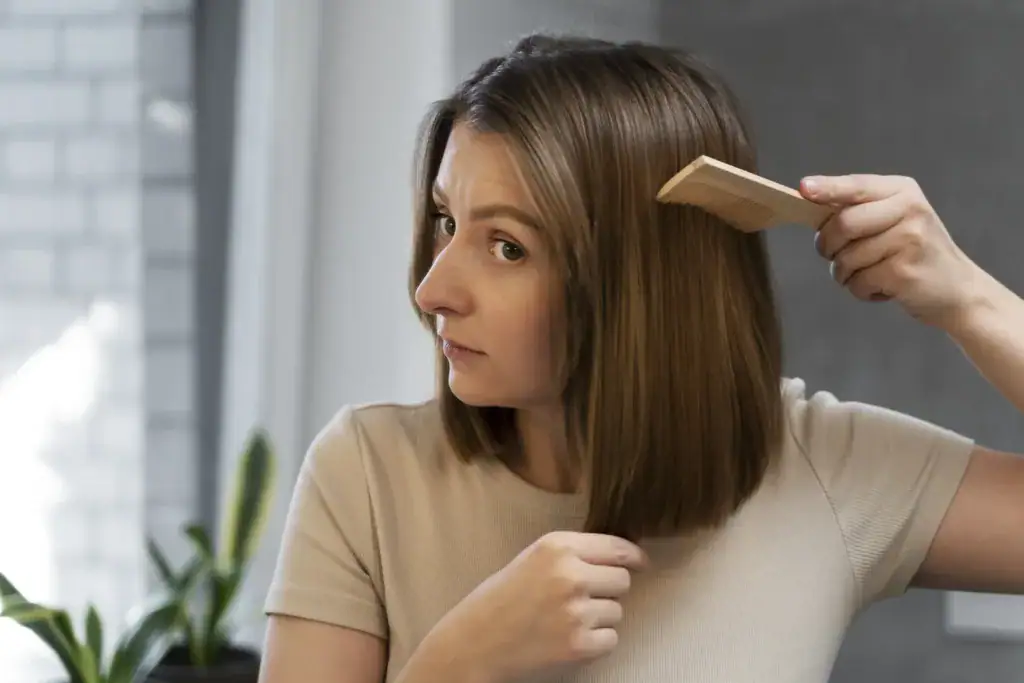
Nutritional changes take about 8 to 12 weeks to show up in new growth, so most people want a short-term solution too. That’s where a stylist helps. A flattering women’s or men’s haircut built for density makes thinning far less noticeable right away.
And while diet strengthens hair from the inside, in-salon bond treatments strengthen the hair you already have from the outside. An Olaplex, K18, or Milbon treatment reduces breakage so more of your growth sticks around. Our guide on how to cover thinning hair with the right cuts and products covers the styling side in full, and our guide to thinning-hair causes covers what else may be at play.
Small Changes Add Up, and You Don’t Have to Figure It Out Alone
Watching your hair thin is stressful, and it’s easy to feel like nothing you do matters. But steady, realistic changes to how you eat, hydrate, and care for your hair really do add up over a few months. Be patient with the diet piece, and let a stylist handle the instant-confidence piece.
Make thinning hair look fuller today.
While your diet does its work, our Scarsdale stylists shape cuts that add the look of density and strengthen your hair with bond treatments. Book a consultation and we’ll build a plan for both the short and long game. Book your appointment or call 914-574-6402.
69 Harney Road, Scarsdale, NY 10583 · 4.9★ (2,400+ Google reviews) · Multiple Best of Westchester awards · Top 100 Salon in the U.S.
Frequently Asked Questions
Can diet reverse thinning hair?
Diet alone may not fully reverse thinning, especially if it’s genetic, but a nutrient-rich diet can improve hair health and help slow or halt shedding caused by deficiencies. Over time, eating well can support thicker, healthier growth.
What foods stop hair thinning?
Foods rich in protein, iron, zinc, biotin, and vitamins A, C, D, and E. Think salmon, eggs, spinach, sweet potatoes, nuts, seeds, and lean meats. A varied diet of whole foods gives hair the building blocks it needs.
Can a bad diet cause hair thinning?
Yes. A diet low in essential nutrients, or high in sugar, processed foods, and unhealthy fats, can disrupt the hair growth cycle and lead to weaker, thinner hair over time. Crash diets are a common trigger for shedding.
Will hair loss from dieting grow back?
Usually, yes. Shedding from temporary dietary changes or deficiencies often reverses once the nutritional gap is corrected, typically within a few months. If it doesn’t, see a doctor or dietitian to rule out other causes.
Numi Hair Salon is located at 69 Harney Road, Scarsdale, NY 10583, and works with fine and thinning hair for clients across Westchester County. This article is general information, not medical or dietary advice; for persistent hair loss, consult a doctor or registered dietitian.
Categories
Recent Posts
A modern shag haircut is a layered cut with soft, [...]

A jellyfish haircut has two layers. A short, round layer [...]
The difference between partial highlights and babylights comes down to [...]